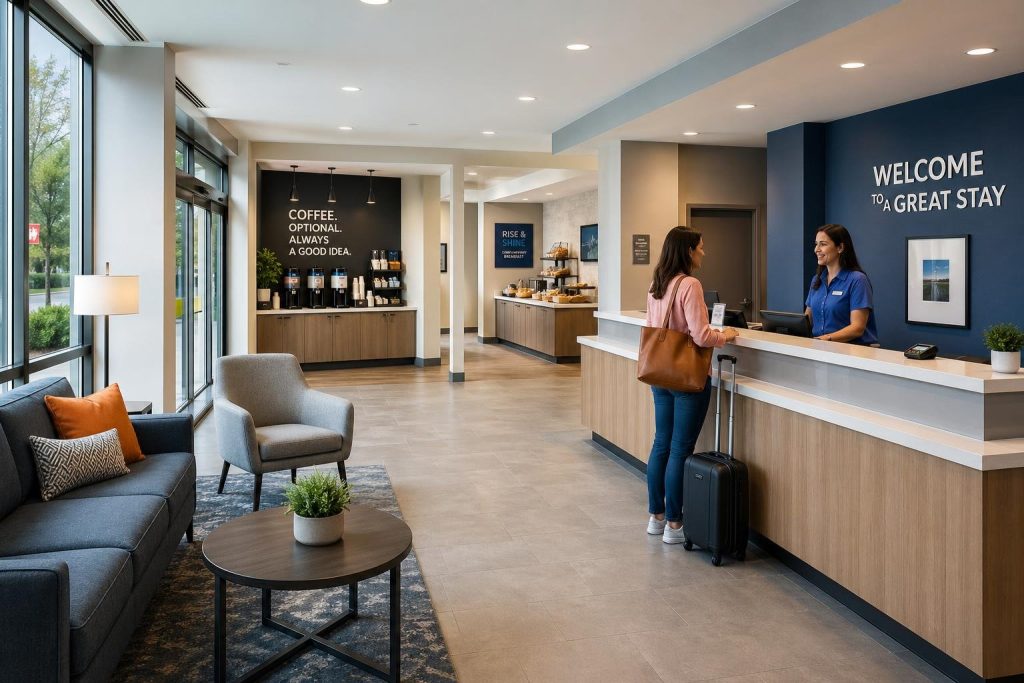
When you’re planning a trip, you’ve probably noticed that not all hotels offer the same services. Some have full restaurants and room service, while others keep things simpler. A select-service hotel is a property that offers limited amenities and services compared to full-service hotels, typically providing essentials like breakfast, Wi-Fi, and fitness centers while skipping features like restaurants, room service, and concierge desks.
Understanding this hotel category can save you money and help you choose the right place for your needs. Select-service properties have become increasingly popular in the hospitality industry because they offer comfortable stays at lower prices. You get a clean room and basic amenities without paying for extras you might not use.
These hotels strike a balance between budget motels and luxury properties. They’re perfect when you need a reliable place to sleep but don’t want to spend much time in your room.
Key Takeaways
- Select-service hotels provide essential amenities like breakfast and Wi-Fi while eliminating costly services you may not need
- Major hotel chains have invested heavily in this model because it meets modern traveler preferences for value and simplicity
- Understanding the differences between service levels helps you choose accommodations that match your travel style and budget
Defining the Select-Service Model
Select-service hotels occupy a middle ground in the lodging industry, offering more than basic accommodations while keeping operations streamlined and costs lower than those of traditional full-service properties.
Comparing Select-Service, Full-Service, and Limited-Service Hotels
Select-service hotels provide a focused range of amenities that fall between limited service and full-service hotels. Limited service hotels typically offer only rooms and basic breakfast, with minimal staff and facilities. Full-service hotels feature extensive food and beverage services, room service, concierge staff, and multiple on-site restaurants.
Select-service properties give you essential amenities without the extra services that drive up costs. You’ll find a breakfast area, fitness center, and business center at most select-service hotels. However, you won’t get room service, bell staff, or full restaurants.
The main difference comes down to staffing and facilities. Full-service hotels maintain large teams to handle every guest’s needs. Select-service hotels use fewer staff members and focus resources on what matters most to travelers.
Core Features and Amenities
Most select-service hotels include complimentary breakfast, free Wi-Fi, and parking. You’ll typically find in-room amenities like microwaves, mini-refrigerators, and coffee makers. A fitness center and business center are standard offerings.
These properties often have self-service laundry facilities instead of full laundry service. The lobby area serves multiple purposes as a workspace, dining area, and social space. Guest rooms are well-equipped, but housekeeping may be limited to every few days rather than daily.
Select-service hotels focus their food and beverage services on breakfast and grab-and-go options. You won’t find full restaurants or bars in most locations. This focused approach lets hotel management keep room revenue high while controlling labor costs.
Role in the Hospitality Industry
The select-service segment has grown significantly as travelers seek value without sacrificing comfort. These properties typically achieve higher gross operating profit margins than full-service hotels because they require fewer staff members and less complex operations.
Select-service hotels appeal to business travelers and families who want reliable accommodation without paying for unused services. This model works well for hotel management companies because the properties are easier to operate and maintain consistent quality standards across multiple locations.
Focused-service properties fill an important gap in the hospitality industry. They give you more than budget hotels while costing less than luxury options.
Major Brands, Market Trends, and Investment Dynamics
Select service hotels represent a significant portion of the hospitality market, with major chains like Marriott, Hilton, and Hyatt leading the sector through strategic brand development and expansion. These properties attract both business travelers seeking reliable accommodations and investors looking for predictable returns in a growing market segment.
Leading Hotel Chains and Brands
Marriott operates several select service brands, including Courtyard by Marriott, Fairfield Inn, and Aloft. These hotels serve different price points within the select service category.
Hilton’s portfolio includes Hilton Garden Inn, Home2 Suites, and Hampton Inn. Each brand targets specific traveler needs while maintaining consistent quality standards.
Hyatt competes with Hyatt Place and Hyatt House in this space. These brands focus on modern design and efficient service delivery.
Other Major Players:
- Intercontinental Hotels Group operates Holiday Inn Express and Staybridge Suites
- Wyndham manages Days Inn and other midscale brands
- Choice Hotels oversees Clarion and multiple economy-focused properties
- Best Western provides independent hoteliers with brand recognition
These hotel brands dominate the select service market through franchise agreements and management contracts. Private equity firms often prefer these branded hotels because they offer proven operational systems and consistent guest demand.
Appeal for Business Travelers and Investors
Business travelers prefer select service properties for their predictable amenities and convenient locations. You get reliable Wi-Fi, comfortable workspaces, and complimentary breakfast without paying for full-service features you won’t use.
Hotel investors find select service properties attractive due to lower labor costs and simpler operations. Your staffing requirements are minimal compared to full-service hotels. This means better profit margins on each room.
RevPAR (revenue per available room) at select service properties often competes well with full-service hotels. You achieve this through higher occupancy rates and efficient cost management.
Extended stay hotels like Residence Inn and Staybridge Suites offer even stronger returns for hotel investors. Business travel generates consistent demand for these properties, especially near corporate centers and medical facilities.
Profitability, Supply, and Market Growth
Select service properties typically deliver higher profit margins than full-service hotels. Your operating costs stay lower because you offer fewer amenities and require less staff.
Interest rates significantly impact hotel investment decisions. When rates rise, hotel investors may slow new development, but existing select service properties often maintain value due to their strong cash flow.
The supply of select service hotels continues to grow across the United States. Hotel brands are expanding in suburban markets and secondary cities where business travel supports steady demand.
Key Market Factors:
- Construction costs favor select service development over full-service projects
- Brand standards from Marriott, Hilton, and Hyatt ensure consistent quality
- Hotel management companies can operate multiple properties efficiently
Private equity groups remain active buyers of select service portfolios. These investors value the predictable income streams and scalability that branded hotels provide. Your investment in select service properties benefits from established reservation systems and loyalty programs that drive occupancy.
Frequently Asked Questions
Select-service hotels occupy a middle ground between basic and luxury accommodations, with specific amenities like complimentary breakfast, fitness centers, and business facilities. Understanding how they compare to other hotel types helps you choose the right option for your travel needs.
How does a select-service hotel differ from a full-service hotel?
Full-service hotels offer extensive on-site dining options, including restaurants, room service, and bars. They employ larger staff teams to provide concierge services, bellhops, and 24-hour assistance.
Select-service hotels have fewer dining options, typically just a complimentary breakfast area. You won’t find room service or multiple restaurants on the property. The staff is smaller, and you’ll handle more tasks yourself, like carrying your own luggage.
Full-service hotels usually feature additional amenities like spas, pools, and event spaces. Room prices at full-service properties are significantly higher because of these extra services and facilities.
How does a select-service hotel differ from a limited-service hotel?
Limited-service hotels provide basic overnight accommodations with minimal amenities. You’ll typically only get a clean room and basic toiletries at these properties.
Select-service hotels include more amenities than limited-service options. You get complimentary breakfast, fitness centers, and business centers. Some select-service properties also offer small meeting rooms and swimming pools.
The lobby and common areas in select-service hotels are larger and more comfortable. Limited-service hotels keep these spaces minimal to reduce costs.
What amenities and services are typically included in a select-service hotel?
Your room includes standard features like comfortable beds, a private bathroom, a TV, and free Wi-Fi. You’ll also get basic toiletries and fresh towels.
Most select-service hotels provide a complimentary breakfast with options like cereal, pastries, fruit, and hot items. A fitness center with cardio equipment and weights is usually available 24 hours a day. You can access a business center with computers and printers for work tasks.
Many properties include a swimming pool and a small convenience shop in the lobby. Front desk service is available throughout the day and night. However, you won’t find restaurants, room service, or valet parking.
Who is the typical target guest for a select-service hotel, and what needs does it serve best?
Business travelers on moderate budgets are common guests at select-service hotels. You benefit from the business center, free Wi-Fi, and a convenient breakfast when you’re traveling for work.
Families and leisure travelers also choose these hotels for good value. You get more amenities than budget hotels without paying full-service prices. The properties work well for stays of one to several nights.
Select-service hotels suit you best when you plan to spend most of your time outside the hotel. You get a comfortable place to sleep and basic services without paying for amenities you won’t use.


