How Do Hotels Detect Smoking in Rooms: Modern Technology and Methods Used by Hospitality Staff
Contents
- Key Takeaways
- Modern Smoking Detection Techniques Hotels Use
- The Role of Smoke and Air Quality Monitors
- Advanced Sensors and Real-Time Detection
- Visual Cues: Residue, Odors, and Burn Marks
- Vape and Nicotine Detection Technologies
- Enforcement, Policies, and Guest Impact
- No-Smoking Policy Enforcement and Staff Training
- Consequences for Smoking in Hotel Rooms
- Designated Smoking Areas and Guest Options
- Frequently Asked Questions
- Will a cigarette trigger a standard hotel smoke detector?
- Can hotel smoke detectors detect vaping or e-cigarette aerosol?
- How do hotels monitor or confirm smoking on balconies or near windows?
- Does running the shower or smoking in the bathroom prevent detection in a hotel room?
- Sources
Hotels have gotten better at catching guests who smoke in rooms. Hotels use smoke detectors, air quality sensors, physical evidence like cigarette butts and ash, and the lingering smell of smoke to detect when guests break the no-smoking policy.
Hiding a cigarette or smoking in the bathroom rarely works. Getting caught can lead to steep cleaning fees and possibly being banned from the property.
Understanding how hotels enforce their no-smoking policies helps you avoid unexpected charges.
Key Takeaways
- Hotels rely on smoke detectors, smoke-sensing room sensors, and physical evidence.
- Smoking fees are set by each hotel and can reach several hundred dollars.
- Housekeeping staff check for smell, ash, and residue after every stay.
Modern Smoking Detection Techniques Hotels Use
Hotels combine electronic air quality monitors with physical inspections. Together they can catch both cigarette smoke and vaping.
The Role of Smoke and Air Quality Monitors
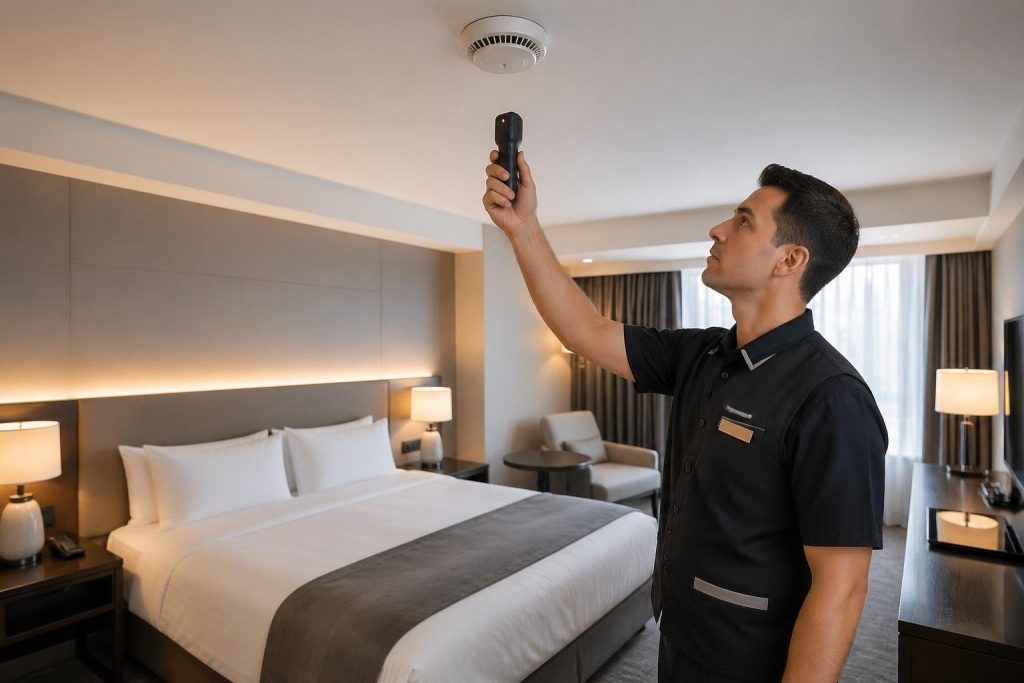
Some hotels install sensors that measure airborne particles and chemicals in the room. When readings spike in a pattern that matches smoke, the system flags the room.
Many of these devices track fine particles (PM2.5) and volatile organic compounds. Hotels that use them often say so in their policies. For example, one Aloft hotel says its rooms have a sensor that picks up smoke from marijuana, vape, tobacco, and e-cigarettes, and it charges a $350 cleaning fee for smoking.
Advanced Sensors and Real-Time Detection
Many smoke-sensing systems send alerts to staff phones or computers within minutes. Staff can then check the room or contact the guest.
These systems compare current readings with baseline readings and keep a log of events. That record helps hotels support a smoking fee if a guest disputes it.
Visual Cues: Residue, Odors, and Burn Marks
Housekeeping staff inspect rooms for physical evidence: ash on surfaces, cigarette butts in trash cans, and burn marks on furniture, bedding, or counters.
Tobacco smoke leaves a yellowish film on windows, mirrors, and bathroom surfaces over time. The smell clings to curtains, upholstery, and bedding, and it often concentrates in bathrooms where guests try to hide smoking.
Vape and Nicotine Detection Technologies
Vaping produces less visible smoke, so some hotels install sensors designed to detect vape aerosol.
Vape aerosol can also leave a thin film on glass and mirrors and a sweet, artificial scent that staff may notice.
Enforcement, Policies, and Guest Impact
Hotels enforce smoke-free policies through clear rules, trained staff, and fees.
Many large hotel companies are smoke-free. Marriott, for example, made its U.S. and Canadian hotels smoke-free in 2006 and says there is a significant room recovery fee for guests who don't comply. Guests may smoke outside in designated areas.
No-Smoking Policy Enforcement and Staff Training
Housekeepers check for ash, butts, odors, and residue during cleaning, including in bathrooms and on balconies.
Front desk staff explain the policy at check-in and document incidents. Managers usually review sensor alerts and staff reports before charging a fee, and they may photograph the evidence.
Consequences for Smoking in Hotel Rooms
Smoking fees are set by each hotel. They cover deep cleaning, odor treatment, and the cost of taking the room out of service. The fee is added to your bill or charged to the card on file.
Possible consequences include:
- A cleaning or room recovery fee
- Being asked to leave
- Being banned from future stays at the property
- Losing a security deposit
Disputing a fee is harder when the hotel has sensor logs or photos.
Designated Smoking Areas and Guest Options
Many hotels have outdoor smoking areas away from entrances and air intakes. Many states and cities also set minimum distances from building entrances, so the rules depend on the location.
A few hotels still offer smoking rooms, but they are increasingly rare. If you smoke, ask the hotel before booking where smoking is allowed.
Frequently Asked Questions
Hotels use several methods to detect smoking, from smoke detectors to visual inspections. These questions cover how they work and whether common tricks to hide smoking succeed.
Will a cigarette trigger a standard hotel smoke detector?
It can, depending on the detector type, the room size, airflow, and how close the smoke gets to the sensor.
Ionization and photoelectric alarms respond to different kinds of fires. Photoelectric alarms are generally more responsive to smoldering smoke, which is closer to what a cigarette produces.
Smoking directly under a detector raises the chance of an alarm. A single cigarette may not set one off, but many hotels also use separate smoke-sensing devices that log smoking without sounding a fire alarm.
Can hotel smoke detectors detect vaping or e-cigarette aerosol?
Sometimes. Dense vape clouds can set off some smoke alarms, especially photoelectric types, because the aerosol scatters light inside the sensor.
Dedicated vape sensors are a separate device. Some hotels install them in rooms and bathrooms.
How do hotels monitor or confirm smoking on balconies or near windows?
Mostly through housekeeping checks and guest complaints. Staff look for butts, ash, and residue on balconies. Neighbors often report smoke drifting from nearby balconies.
Smoke near an open window still drifts into the room and leaves odors in curtains and bedding.
Does running the shower or smoking in the bathroom prevent detection in a hotel room?
No. Steam doesn't hide smoke, and it can actually set off smoke alarms. Fire safety agencies advise placing alarms away from bathrooms for that reason. Never cover or disable a smoke alarm; the U.S. Fire Administration warns that disabling an alarm can be a deadly mistake.
Bathroom surfaces, towels, and exhaust vents trap smoke odor, and a bathroom fan can't clear it all. Housekeepers check bathrooms closely.
Sources
- The Marriott Smoke-free Hotel Policy, Marriott International
- Aloft BWI Baltimore-Washington International Airport rooms, Marriott International
- Smoke Alarms, U.S. Fire Administration