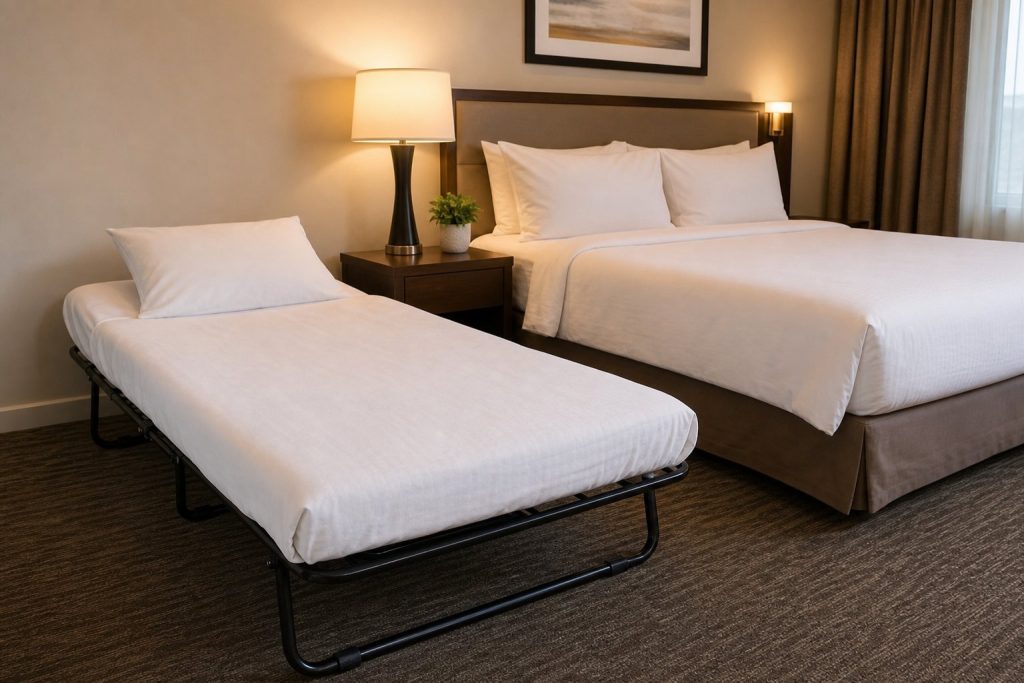
A rollaway bed is a portable bed on wheels that hotels provide as extra sleeping space in a guest room, typically for an additional fee. Hotels also call these beds rollaway cots, folding beds, or extra beds. They fold up for easy storage and roll into place when guests need them.
Many travelers need rollaway beds when their party size exceeds the standard room capacity. Families with children, groups of friends, or business travelers sharing rooms often request these beds. Hotels keep them stored away and bring them to rooms upon request.
Understanding how rollaway beds work helps guests plan their accommodations better. Knowing what to expect in terms of comfort, size, and cost makes it easier to decide if a rollaway bed fits your travel needs.
Key Takeaways
- Rollaway beds are portable, foldable beds that hotels deliver to rooms for extra sleeping space
- Hotels charge additional fees for rollaway beds, and availability depends on room size and hotel policy
- These beds work well for short stays, but may be less comfortable than standard hotel beds
Key Features, Types of Rollaway Beds, and Uses
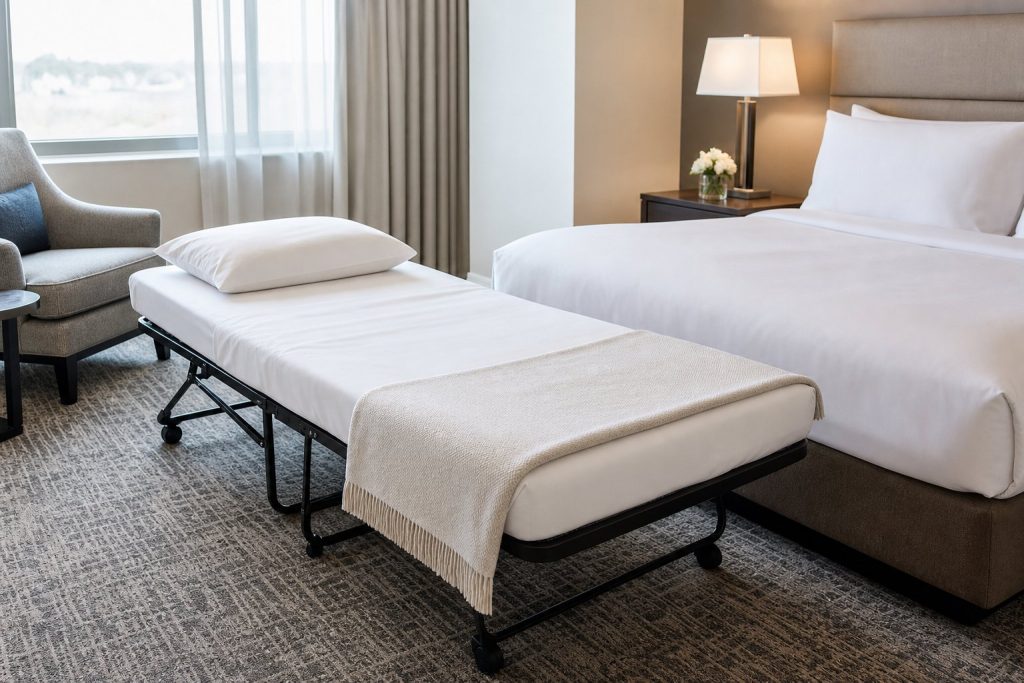
Rollaway beds serve as temporary sleeping solutions that hotels provide to accommodate extra guests in a room. These portable beds fold up for storage and roll on wheels for easy transport between rooms.
Defining Rollaway Beds and How They Work
A rollaway bed is a portable sleeping surface mounted on a wheeled frame that folds for compact storage. The right rollaway bed unfolds into a full sleeping platform when needed and collapses back down when not in use.
Most hotel rollaway beds feature a metal frame with four wheels or casters attached to the base. The mattress sits on top of a support system made of metal slats, springs, or a solid platform. When folded, the bed stands upright and takes up minimal floor space in storage closets or housekeeping areas.
The wheels lock in place once the bed is positioned in a guest room. This prevents the bed from rolling during use. Staff can unlock the wheels to move the bed between rooms or back to storage.
Common Designs and Materials
Standard rollaway beds typically measure 36 inches wide by 75 inches long, similar to a twin bed. The metal frame is usually made from steel tubing for durability and weight support.
The mattress on a hotel rollaway bed ranges from 4 to 6 inches thick. Most use foam construction, though some hotels provide innerspring mattresses for better comfort. The mattress connects to the frame with straps or clips to prevent shifting.
Common materials include:
- Steel or aluminum frames
- Foam or innerspring mattresses
- Fabric or vinyl mattress covers
- Rubber or plastic wheel casters
- Metal folding mechanisms with safety locks
Types of Portable and Folding Beds Found in Hotels
Hotels stock several types of collapsible beds beyond the standard rollaway bed. Each type serves different guest needs and room configurations.
A folding bed or foldable bed works similarly to a rollaway but may have a simpler frame design. A cot sits lower to the ground and typically has a fabric sleeping surface stretched across a lightweight frame. Some hotels offer portable beds with air mattresses instead of foam.
Higher-end properties might provide guest beds with thicker mattresses and sturdier frames. Budget hotels often use basic cots or simple folding beds. Some rooms include built-in options like a sofa bed rather than bringing in a separate rollaway.
| Bed Type | Height | Mattress Type | Best For |
|---|---|---|---|
| Standard Rollaway | 20-24 inches | Foam (4-6 inches) | Adults and older children |
| Cot | 12-18 inches | Fabric or thin foam | Children or emergency use |
| Premium Rollaway | 20-24 inches | Innerspring (6+ inches) | Extended stays |
Primary Uses and Guest Scenarios
Hotels use rollaway beds to create extra sleeping space without booking an additional room. Families traveling with children commonly request these beds to accommodate everyone in one room.
Business travelers sometimes need a rollaway bed when sharing a room with colleagues. Parents visiting adult children in college towns often use rollaway beds in dorm-adjacent hotels.
The beds also serve guests who prefer separate sleeping arrangements. Conference attendees and wedding parties frequently request hospitality rollaway beds for group room bookings. Hotels charge a daily fee for rollaway beds, typically between $15 and $40 per night.
Comfort, Fees, and Considerations for Guests
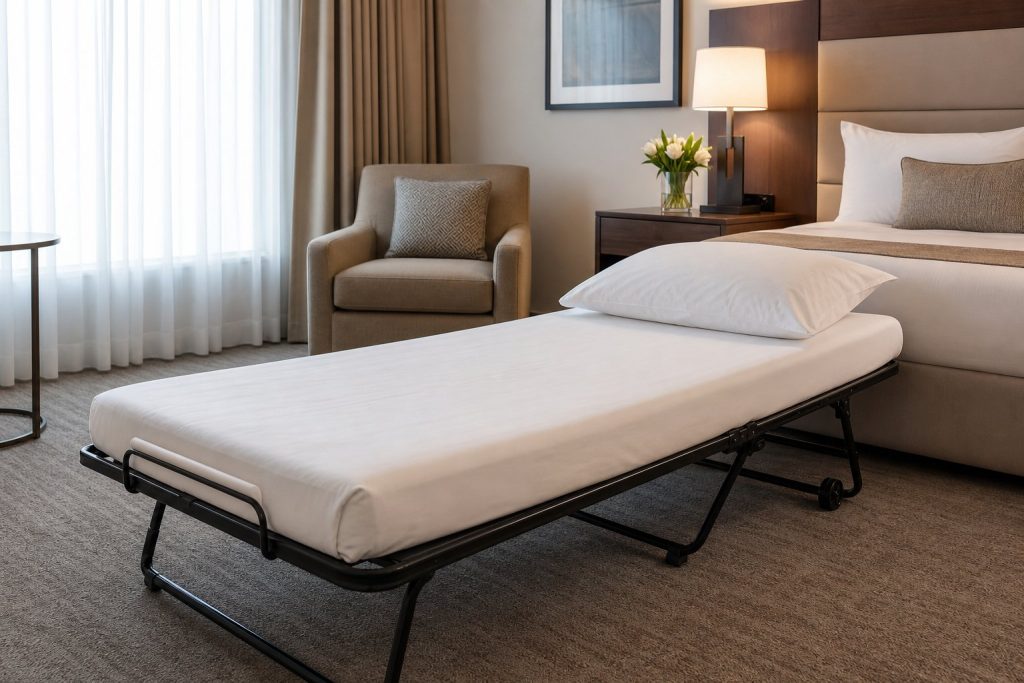
Rollaway beds vary in comfort level depending on the hotel’s quality standards. Most hotels charge additional fees for these beds, though policies differ by property and guest status.
Are Rollaway Beds Comfortable?
The comfort of rollaway beds in hotels depends on the mattress quality and frame construction. Budget hotels often provide thinner mattresses, around 4 inches thick, while upscale properties offer 5 to 6-inch mattresses with better support.
Most hotel rollaway beds use foam or innerspring mattresses. The foam versions tend to be firmer and less cushioned than standard hotel beds. Innerspring models provide more traditional comfort but can develop sagging spots over time.
The metal frames sometimes squeak or shift during sleep. Guests over 200 pounds may find the beds less supportive than regular mattresses. Children and lighter adults typically report adequate comfort for short stays of one to three nights.
Hotels usually provide standard linens and pillows with rollaway beds. The sleeping surface measures about 30 to 39 inches wide and 75 inches long, which is smaller than a twin bed.
If the idea of a good night’s sleep or a restful night’s sleep is what you have in mind, a hotel folding bed or a rollaway bed may not be the answer.
Rollaway Bed Fees and Hotel Policies
Hotels typically charge between $10 and $50 per night for a rollaway bed. Luxury properties often charge higher fees, ranging from $25 to $50, while mid-range hotels charge $15 to $30.
Many hotels waive the rollaway bed fee for loyalty program members or suite bookings. Some properties include one free guest bed when children under 12 stay in the room. Business travelers may receive complimentary rollaway beds through corporate rates.
Guests should request rollaway beds during booking rather than at check-in. Most hotels have limited quantities, and popular travel dates see higher demand for extra sleeping space.
Fire codes restrict the number of guests per room. A standard room usually accommodates one rollaway bed, bringing the total occupancy to three or four people, depending on existing beds.
Comparing Alternatives: Sofa Beds, Air Mattresses, and Cots
Sofa beds offer similar comfort to rollaway beds but take up permanent floor space in the room. They convert from seating to sleeping surfaces and typically measure 52 to 72 inches wide. The mattresses fold inside the frame, which can create an uncomfortable ridge in the middle.
Air mattresses provide a softer sleeping surface than most rollaway beds. Hotels rarely offer them, so guests must bring their own. They require an electrical outlet for inflation and can deflate during the night.
Cots are the most basic option for extra sleeping space. They feature fabric stretched over a metal frame with minimal padding. Hotels charge $5 to $20 per night for cots, making them cheaper than rollaway beds.
Comparison of Guest Bed Options:
| Option | Typical Cost | Comfort Level | Setup Required |
|---|---|---|---|
| Rollaway Bed | $10-$50/night | Moderate | Hotel staff delivers |
| Sofa Bed | Usually included | Moderate | Guest unfolds |
| Air Mattress | Guest provides | Soft to moderate | Guest inflates |
| Cot | $5-$20/night | Basic | Hotel staff delivers |
Hospitality rollaway beds remain the most requested option because hotels deliver and set them up for guests.
Frequently Asked Questions
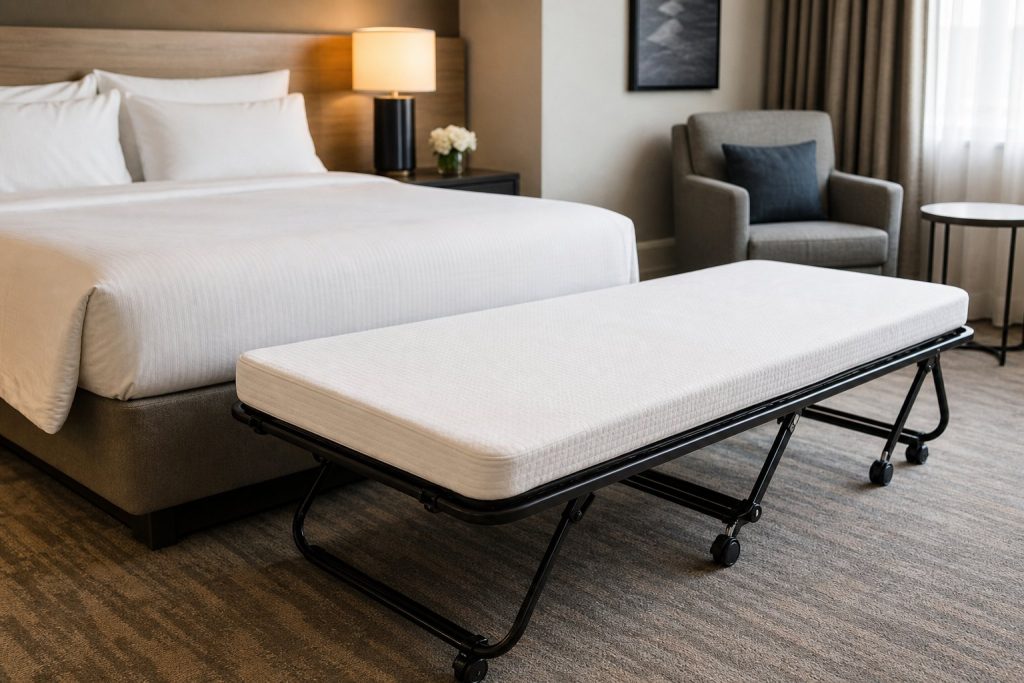
Rollaway beds go by several names in the hotel industry, and most hotels keep them available for guests who need extra sleeping space. Hotels typically charge a daily fee for this service, though some waive it in specific situations.
What is a rollaway bed in a hotel called?
A rollaway bed goes by several different names depending on the hotel. Many hotels call it a cot, a folding bed, or a portable bed.
Some properties refer to it as a guest bed or extra bed. All these terms describe the same piece of furniture – a temporary bed on wheels that staff can move in and out of guest rooms.
Do most hotels provide rollaway beds upon request?
Most hotels keep rollaway beds available for guests who request them. The availability depends on the hotel’s size and how many beds are currently in use by other guests.
Budget hotels and smaller properties might have a limited number of rollaway beds. Larger hotels typically maintain a bigger inventory to meet guest demand.
Some hotels cannot provide rollaway beds in certain room types due to fire codes or space restrictions. Guests should confirm availability when making their reservation.
How do you request an extra bed from a hotel before or during your stay?
Guests can request a rollaway bed when booking their room online or by phone. They should mention the need for an extra bed to the reservation agent or add it as a special request in the booking notes.
During check-in, guests can ask the front desk staff for a rollaway bed. The housekeeping or maintenance team will deliver it to the room, usually within 30 minutes to an hour.
Guests already in their rooms can call the front desk to request delivery at any time. Most hotels fulfill these requests quickly as long as beds are available.
How much do hotels typically charge for a rollaway bed, and when is the fee waived?
Hotels usually charge between $10 and $50 per night for a rollaway bed. The fee varies based on the hotel’s brand, location, and room rate.
Luxury hotels often charge higher fees, sometimes reaching $75 per night. Budget and mid-range hotels typically stay at the lower end of the price range.
Many hotels waive the fee for loyalty program members at certain tier levels. Some properties include the rollaway bed at no charge when guests book specific room packages or for children under a certain age.


