Do Hotels Have Generators for Hurricanes: Emergency Power Systems Explained
Contents
- Key Takeaways
- How Hotels Prepare for Hurricanes and Power Outages
- Prevalence of Hotel Backup Power Systems
- Critical Systems Supported During Power Loss
- Impact of Power Outages on Guest Experience
- Types of Backup Generators and Emergency Power Solutions in Hotels
- Diesel and Natural Gas Generators
- Role of Portable Generators
- Automatic Transfer Switch and Generator Activation
- Frequently Asked Questions
- Do most hotels have backup power systems for extended outages?
- How long can a typical hotel generator keep essential services running?
- Which major hotel chains are more likely to have backup generators?
- Are hotels in hurricane-prone states required to have generators by law?
- What amenities usually stay operational in a hotel during a power outage?
- Can guests request refunds or reimbursement if hotel power fails during their stay?
- Sources
Hurricane season raises real questions for travelers staying at coastal hotels. When storms knock out power, guests want to know whether the hotel can keep lights, air conditioning, and elevators running.
So, does your hotel have a generator? Here's what to expect.
Many hotels have backup generators, but what they power varies widely by building, size, and location. Some large resorts and high-rise hotels can run much of the property on backup power. Many smaller hotels back up only emergency lighting, fire alarms, and a few essential systems.
Few hotels can keep every guest room fully air-conditioned during a long outage. Knowing what backup power a hotel has helps you make informed decisions when booking stays during hurricane season.
Key Takeaways
- Many hotels in hurricane-prone areas have backup power, but capacity varies widely.
- Backup power usually covers life-safety systems first; full guest-room comfort is less common.
- Call the hotel before booking to ask what its generator actually powers.
How Hotels Prepare for Hurricanes and Power Outages
Hotels in hurricane-prone areas typically have emergency plans, and many have backup generators. The level of preparation depends on the building, the owner, and local codes.
Prevalence of Hotel Backup Power Systems
Large full-service hotels, resorts, and high-rise buildings are the most likely to have permanent standby generators. Smaller and older properties may rely on battery-powered emergency lighting with limited or no generator capacity.
Backup power is especially worth asking about in:
- Florida coastal regions
- Gulf Coast states
- Caribbean resort destinations
- Other areas with frequent severe weather
Hotels rarely list backup power capabilities in their booking details. If you're traveling during hurricane season, call ahead and ask.
Critical Systems Supported During Power Loss
Hotel backup systems are usually built to protect guest safety first. Depending on the building, they may support:
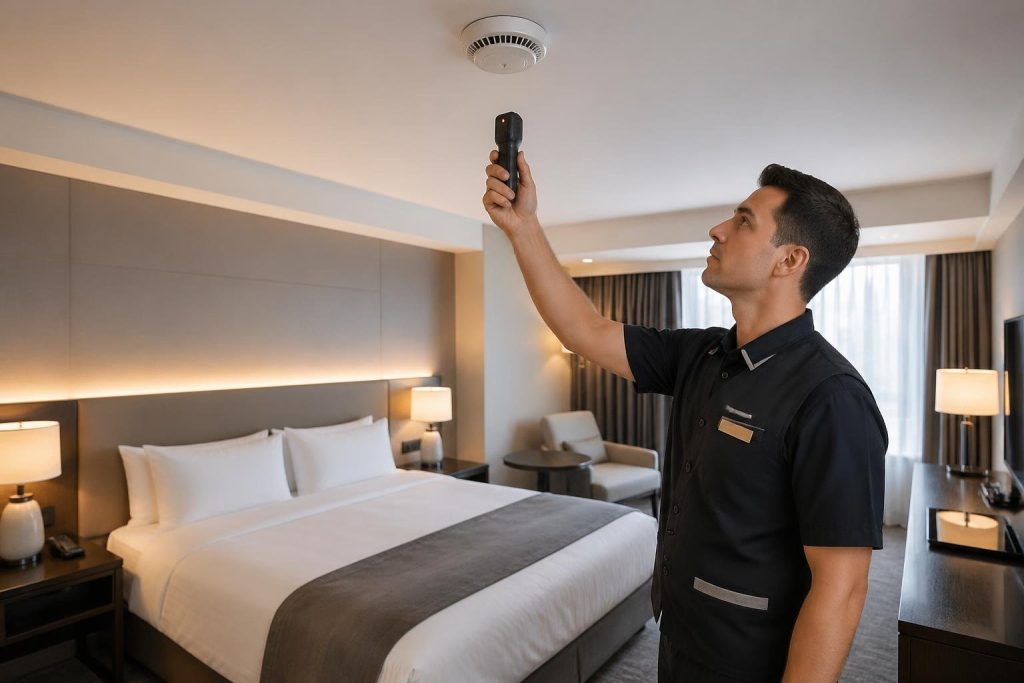
- Emergency lighting in hallways and stairwells
- Fire alarm systems and fire pumps
- At least some elevator service in taller buildings
- Security systems and electronic door locks
- Refrigeration for food storage
- Limited air conditioning in common areas
Guest-room outlets, TVs, and in-room air conditioning often stop working unless the hotel's generator is sized for the whole building.
Impact of Power Outages on Guest Experience
Without air conditioning, rooms quickly become hot and humid. Dark hallways and stairs also raise safety risks.
Services often lost during a power outage:
- Room climate control
- Hot water, if the water heaters are electric and not on backup power
- Wi-Fi and internet access
- Restaurant kitchen operations
- Laundry service
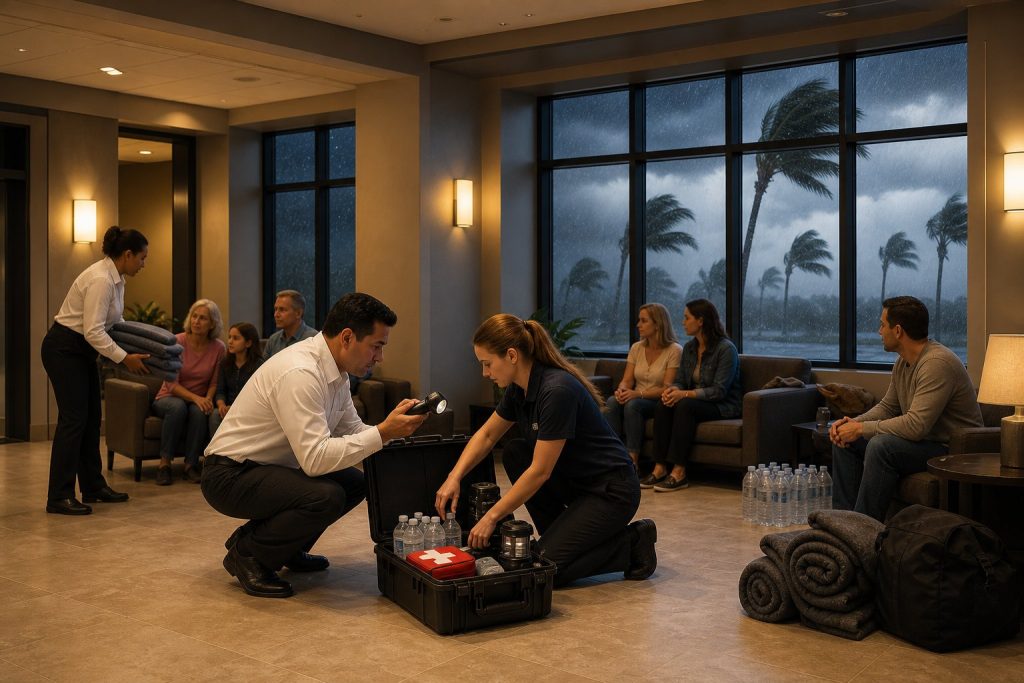
Hotels outside an evacuation zone often fill up with evacuees and utility crews before and after a storm, while hotels inside an evacuation zone may close. Some hotels hand out flashlights, battery-powered fans, and bottled water.
Food service usually shrinks to cold or simple meals, and housekeeping is often reduced while staff focus on safety. If you bring perishable food or medicine, remember that a refrigerator without power keeps food cold for only about four hours with the door closed.
Types of Backup Generators and Emergency Power Solutions in Hotels
Hotels use a mix of permanent generators, portable units, and automatic transfer switches.
Diesel and Natural Gas Generators
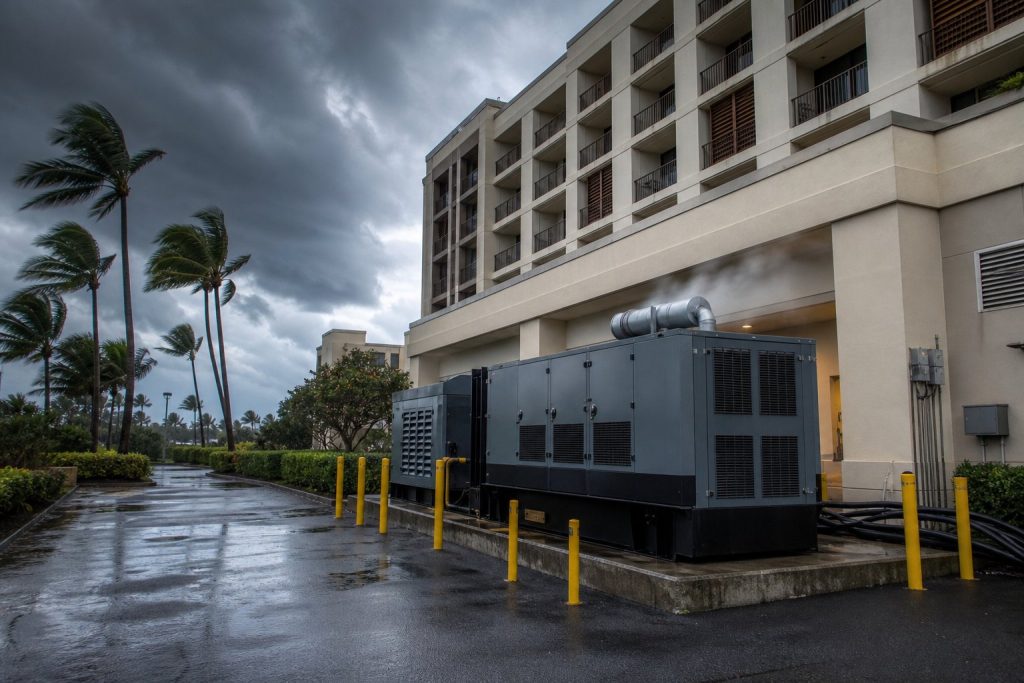
Diesel generators are common because fuel can be stored on site, which helps during multi-day power outages. Depending on their size, they power systems such as emergency lighting, elevators, kitchen equipment, and HVAC. How long they run depends on tank size, load, and whether the hotel can get fuel deliveries after the storm.
Natural gas generators connect to the gas utility, so they don't need a large on-site fuel tank. They depend on the gas supply staying on, which a severe storm can interrupt.
Hotels choose between these options based on fuel availability, budget, and local building codes.
Role of Portable Generators
Some hotels keep portable generators to power specific needs, such as front desk computers or communication equipment. Staff can move them as needs change.
Portable generators produce deadly carbon monoxide. CDC says to run them outdoors more than 20 feet from windows, doors, and vents, and never inside a building or garage, even with doors and windows open. Guests should never bring or run their own generator at a hotel.
Automatic Transfer Switch and Generator Activation
An automatic transfer switch detects when utility power fails, starts the standby generator, and moves the building's essential circuits onto it. Emergency systems are designed to come back within seconds. When utility power returns, the switch transfers the load back.
Transfer switches come in a wide range of sizes, from small units up to about 4,000 amps for large buildings.
Frequently Asked Questions
Generator capacity depends on the property, local codes, and the owner's choices.
Do most hotels have backup power systems for extended outages?
Not for the whole building. Many hotels have backup power only for emergency lighting, exit signs, and fire safety systems.
Large hotels and resorts in hurricane-prone areas are more likely to have generators that can run for days. Smaller hotels often have far less.
How long can a typical hotel generator keep essential services running?
There is no typical figure. Runtime depends on tank size, how much the generator is powering, and whether fuel can be delivered. A hotel might plan for anywhere from several hours to 24 to 72 hours or longer on stored fuel. Ask the hotel directly.
Which major hotel chains are more likely to have backup generators?
Backup power is decided property by property, not by brand. Large resorts and full-service properties are more likely to have substantial systems than small select-service hotels, but call the specific hotel to confirm.
Are hotels in hurricane-prone states required to have generators by law?
Building and fire codes require emergency lighting and life-safety power, but generally not full backup power for guest rooms. After Hurricane Irma in 2017, Florida adopted generator rules for nursing homes and assisted living facilities, not hotels. For example, Florida's nursing home rule requires an alternative power source that can keep part of the facility at 81°F or cooler for at least 96 hours.
What amenities usually stay operational in a hotel during a power outage?
Emergency lighting and exit signs work in nearly all hotels, at least for a limited time. Fire alarm systems also stay on.
Hotels with whole-building backup may keep air conditioning, elevators, and front desk systems running. Hot water may stay available if the hotel uses gas water heaters or has them on backup power.
Restaurants and pools often close. Wi-Fi and cable TV can go down if outside providers lose power.
Can guests request refunds or reimbursement if hotel power fails during their stay?
You can ask, but hotels are not automatically required to refund you for a storm outage. Policies vary by property.
Some hotels offer rate reductions or credits when services are lost. Travel insurance may cover some costs from natural disasters, depending on the plan.
Keep records of the outage and your conversations with hotel management if you plan to request a refund.
Sources
- Carbon Monoxide Poisoning Basics, Centers for Disease Control and Prevention
- Power Outages, Ready.gov (FEMA)
- Final Bill Analysis, HB 7099 (2018), Florida House of Representatives