Hurricane season brings serious concerns for travelers staying at coastal hotels. When storms knock out power, guests need to know if their hotel can maintain basic services like lighting, air conditioning, and refrigeration.
So, is there a generator for your hotel? We’ll find out all about that in this article
Most hotels use backup generators to keep optimal performance and power efficiency that hotels need. But the size and capacity of these systems vary widely depending on the hotel’s location, size, and classification. Large chain hotels and luxury resorts typically invest in industrial generators capable of powering entire properties for days. Smaller hotels and budget accommodations may only have limited backup power for essential systems like emergency lighting and elevators.
Not all hotel systems are equally prepared for extended power outages during hurricanes. Some properties can keep guest rooms comfortable with full air conditioning and hot water, while others can only maintain lobby areas and critical safety equipment. Understanding what backup power a hotel offers helps travelers make informed decisions when booking stays during hurricane season.
Key Takeaways
- Most hotels located in areas like hurricane zones have backup generators, but their capacity varies by hotel size and type
- Larger chain hotels typically maintain full services during outages while smaller properties may only power essential systems
- Checking a hotel’s emergency power capabilities before booking helps travelers prepare for potential hurricane situations
How Hotels Prepare for Hurricanes and Power Outages
Most hotels in hurricane-prone areas maintain backup generators and emergency plans to keep guests safe during storms. The level of preparation varies significantly based on the hotel’s location, size, and rating.
Prevalence of Hotel Backup Power Systems
Hotels in coastal regions and hurricane zones typically invest in backup generators as part of their standard operations. Large hotel chains and luxury properties almost always have emergency power systems installed. Budget hotels and smaller independent properties may lack generators due to the high cost of purchase and maintenance.
Hotels with backup generators are most common in these areas:
- Florida coastal regions
- Gulf Coast states
- Caribbean resort destinations
- Areas with frequent severe weather
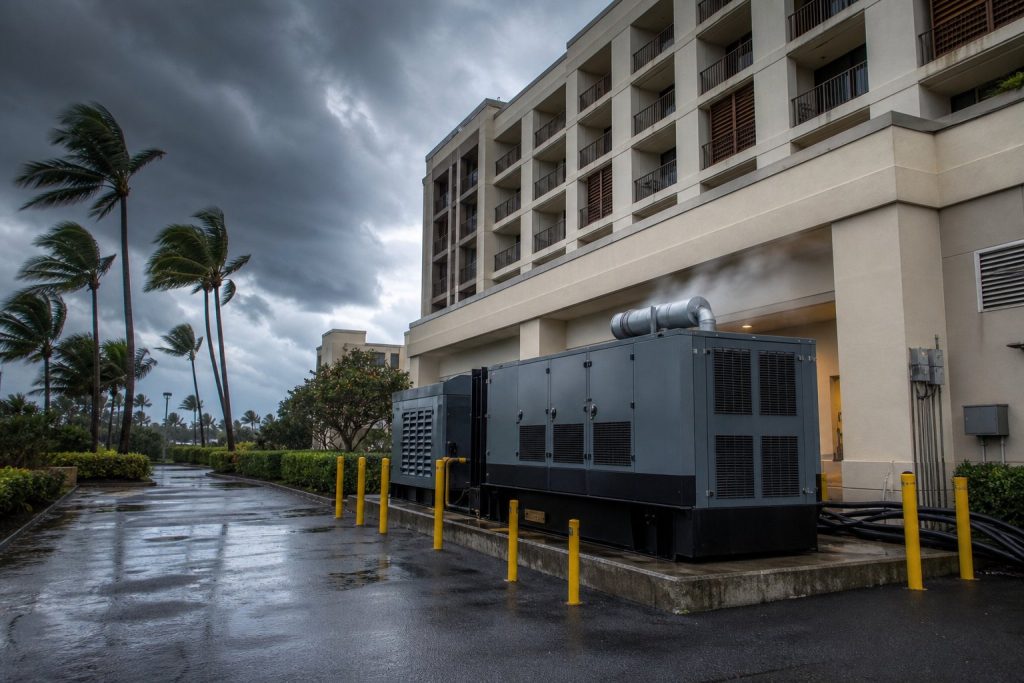
The type of generator systems varies by property size. Small hotels might use portable generators that power only essential areas. Mid-size properties often install permanent standby generators. Large resorts frequently operate multiple industrial generators that can power entire buildings.
Not all hotels disclose their backup power capabilities during booking. Guests traveling during hurricane season should call ahead to confirm whether a property has emergency power.
Critical Systems Supported During Power Loss
Hotel backup generators rarely power entire buildings. Instead, they focus on essential systems that protect guest safety and basic comfort.
Most hotel backup power systems support:
- Emergency lighting in hallways and stairwells
- One elevator per bank for guest evacuation
- Fire alarm and sprinkler systems
- Security systems and door locks
- Refrigeration for food storage
- Limited air conditioning in common areas
Some generators only run for specific time periods to conserve fuel. A hotel might operate its generator for two hours, then shut it down for one hour before restarting. This cycle helps fuel supplies last several days during extended outages.
Guest rooms typically receive minimal or no power during outages. Outlets, televisions, and room air conditioning usually stop working even with a generator running.
Impact of Power Outages on Guest Experience
Power outages during hurricanes create major disruptions for hotel guests. Rooms become hot and uncomfortable without air conditioning, especially in humid climates. Darkness makes navigation difficult and increases safety risks.
Hotels lose these services during power loss:
- Room climate control
- Hot water for showers
- WiFi and internet access
- Restaurant kitchen operations
- Laundry facilities
Many hotels stop accepting new guests once a hurricane warning is issued. Properties that remain open often move guests to lower floors to avoid elevator dependency. Some hotels provide flashlights, battery-powered fans, and bottled water to rooms.
Food service becomes limited since full kitchens cannot operate. Hotels might serve cold meals, sandwiches, or pre-prepared items that don’t require cooking. Guests should expect reduced housekeeping services during outages since staff focuses on safety and emergency response.
Types of Backup Generators and Emergency Power Solutions in Hotels
Hotels use different types of backup power systems to keep essential services running during hurricanes and other emergencies. The most common solutions include permanent diesel or natural gas generators, smaller portable units, and automatic transfer switches that detect power loss.
Diesel and Natural Gas Generators
Diesel generators are the most popular choice for hotels because they can run for extended periods during multi-day power outages. These units typically power critical systems like emergency lighting, elevators, kitchen equipment, and HVAC systems. Most large hotels install diesel generators with fuel tanks that hold enough supply for 48 to 72 hours of continuous operation.
Natural gas generators offer an alternative that connects directly to municipal gas lines. This setup eliminates the need for on-site fuel storage and provides an unlimited fuel supply during extended outages. However, natural gas generators may not work if gas lines are damaged during a hurricane.
Hotels often choose between these options based on local fuel availability, budget, and building codes. Diesel units cost less upfront but require regular fuel tank maintenance and monitoring.
Role of Portable Generators
Portable generators serve as supplemental power sources for hotels during emergencies. These smaller units typically power specific areas like front desk computers, communication systems, or guest rooms that need medical equipment. Hotels keep portable generators on hand to fill gaps when the main backup generator reaches capacity.
Most portable generators run on gasoline or propane and provide 3,000 to 10,000 watts of power. Staff can move these units to different locations as needs change during an emergency. Hotels must store portable generators in dry, accessible areas with proper ventilation for safe operation.
Automatic Transfer Switch and Generator Activation
An automatic transfer switch detects when utility power fails and immediately signals the backup generator to start. This system activates within 10 to 30 seconds of a power outage, ensuring minimal disruption to hotel operations. The switch continuously monitors the main power supply and automatically returns to utility power once it’s restored.
Hotels install automatic transfer switches to eliminate the need for manual generator startup during emergencies. The system protects sensitive electronics by managing the transition between power sources smoothly. Most hotel-grade automatic transfer switches can handle loads between 100 and 4,000 amps depending on the property size.
Frequently Asked Questions
Hotels vary in their generator capabilities depending on location, size, and brand standards. State laws differ on backup power requirements, and guest compensation policies depend on individual hotel agreements.
Do most hotels have backup power systems for extended outages?
Most hotels do not have full backup power systems for extended outages. Many hotels only have generators that power emergency lighting, exit signs, and fire safety systems.
Larger hotels and resorts in hurricane-prone areas are more likely to have substantial backup power. These properties often invest in generators that can run for several days. Smaller budget hotels typically lack comprehensive backup systems.
How long can a typical hotel generator keep essential services running?
A typical hotel generator can run essential services for 24 to 72 hours on a full fuel tank. The actual duration depends on the generator size and how many systems it powers.
Hotels with larger commercial generators and additional fuel storage can extend operations up to a week. Some properties have fuel delivery contracts that allow them to refill tanks during extended outages. Budget hotels with basic emergency generators may only maintain power for 8 to 12 hours.
Which major hotel chains are more likely to have backup generators?
Major hotel chains like Marriott, Hilton, and Hyatt often equip their full-service properties with backup generators. Their upscale and luxury brands typically have more comprehensive systems than their budget brands.
Resort chains in coastal areas generally prioritize generator installation. Marriott’s Ritz-Carlton properties and Hilton’s premium hotels usually have substantial backup power. Holiday Inn Express and similar mid-tier brands may have limited or no generator capacity.
Are hotels in hurricane-prone states required to have generators by law?
Florida requires hotels built after 2017 to have backup power for essential services like fire alarms and emergency lighting. The state does not mandate full building power for most hotels.
Texas and Louisiana have limited requirements focused on life safety systems. Most states leave generator installation as a business decision rather than a legal requirement. Assisted living facilities and hospitals face stricter mandates than hotels.
What amenities usually stay operational in a hotel during a power outage?
Emergency lighting and exit signs remain operational in nearly all hotels during power outages. Fire alarm systems and elevators on emergency power also continue working at most properties.
Hotels with full backup systems typically maintain air conditioning in guest rooms and common areas. Front desk computers, room key systems, and some lighting usually stay active. Hot water may remain available if the hotel has gas water heaters or electric heaters connected to the generator.
Restaurants and pools often shut down during outages. WiFi and cable TV services depend on external providers that may lose power independently.
Can guests request refunds or reimbursement if hotel power fails during their stay?
Guests can request refunds, but hotels are not automatically required to provide them for power outages. Most hotel policies treat power failures as unforeseen circumstances beyond their control.
Many hotels offer compensation through discounted rates, room credits, or loyalty points when power disruptions occur. Guests who booked non-refundable rates have less leverage for full refunds. Travel insurance sometimes covers accommodation issues from natural disasters.
Credit card dispute processes may help guests who receive no services during their stay. Documentation of the outage and communication with hotel management strengthens refund requests.