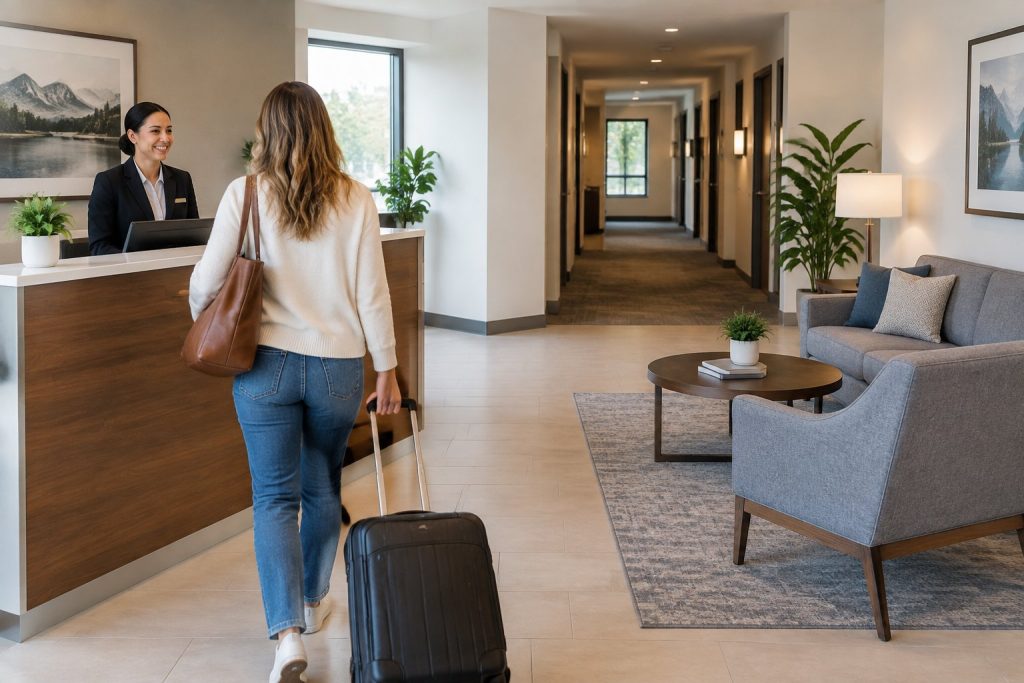
A limited-service hotel is a budget-friendly property that skips extras like a full restaurant or concierge desk and instead focuses on clean rooms, a comfortable bed, and a fair price. This model has become one of the fastest-growing corners of the hospitality industry because it matches what a lot of travelers actually want: a good night’s sleep without paying for amenities they’ll never use. The hotel industry has leaned into this format for decades, and it shows no sign of slowing down.
Anyone who has booked a quick overnight stay near an airport or highway exit has probably stayed at one of these properties without thinking twice about the label. The rest of this article breaks down what sets these hotels apart, who books them, and what owners can do to keep guests coming back.
Key Takeaways
- Limited-service hotels keep costs low by trimming extras like on-site dining and concierge staff, while still delivering clean, comfortable rooms.
- These properties attract a wide mix of guests, from cost-conscious business travelers to families looking for a simple place to sleep.
- Owners who focus on cleanliness, smart technology, and a few thoughtful guest touches can boost both revenue and repeat bookings.
What is a Limited Service Hotel?
A limited service hotel is a lodging property that provides comfortable, functional rooms without the restaurants, room service, or extensive amenities found at larger properties. A limited-service hotel is best defined as a no-frills lodging option built around clean rooms and fair pricing, which suits travelers who want a reliable place to sleep without paying for extras they won’t use. Guests get a private bathroom, a decent bed, and Wi-Fi, but they won’t find a spa or a big banquet hall.
Well-known limited service hotel brands include Holiday Inn Express, Fairfield Inn, Motel 6, Comfort Inn, Hampton Inn, and Super 8. Each of these hotel brands has built a reputation on consistency rather than luxury. A traveler who books a Hampton Inn in one city generally knows what to expect in another, and that predictability is part of the appeal.
Some limited-service hotels stretch into longer stays too. Homewood Suites, for example, blends the limited-service model with features suited to guests who plan to stay a week or more, like a small kitchen area. This crossover shows how flexible the category has become, even though the core idea, keeping costs down while covering the basics well, stays the same across nearly every property in this space.
Who Are Limited Service Hotels Designed For?
Limited service hotels are built for travelers who want a comfortable stay without paying for amenities they won’t use. This makes them a natural fit for business travel, since many companies set per-night spending limits and reward employees who book smart. A sales rep on a three-city trip doesn’t need a pool or a fine-dining menu, just a clean room and a fast checkout.
Budget-conscious travelers make up another large share of the guest base. Families on road trips, students visiting colleges, and anyone stretching a vacation budget tend to gravitate toward these properties because the nightly rate leaves more room for the parts of the trip that matter most, like meals out or event tickets.
Guests planning extended stays also turn to this category, particularly the brands that offer small kitchenettes or weekly rate discounts. A traveler relocating for a new job or working a monthlong project nearby doesn’t want restaurant service; they want space to cook and a quiet place to settle in.
Frequent travelers round out the mix. Many hotel chains attach loyalty programs to their limited-service brands, giving road warriors a reason to keep booking the same name even when a cheaper option sits down the street.
3 Challenges of Running a Limited Service Hotel
Running a limited service hotel means balancing thin margins against guest expectations that keep rising every year. Owners have to keep staffing lean and amenities simple while still delivering a stay that earns a good review, and that balance takes constant attention.
Standing out in a crowded market is another real hurdle. With so many similar-looking properties clustered near highways and airports, a hotel needs something that makes it memorable, whether that’s a genuinely friendly front desk team or a small design detail that guests mention in reviews.
Keeping the occupancy rate high enough to protect profitability is a constant pressure point too. Because room rates sit lower than at full-service hotels, a limited-service property often needs strong occupancy just to hit the same net operating income as a pricier competitor with fewer rooms filled. Tracking the NOI margin closely helps owners spot when costs are creeping up faster than revenue, and adjusting quickly protects the net operating income (NOI) that keeps the property viable long term.
3 Key Characteristics of Limited Service Hotels
Limited service properties share a handful of traits that set them apart from bigger, pricier hotels. These budget-friendly hotels tend to look similar from one brand to the next, and three features show up almost everywhere.
1. Low-Priced Rates
Lower rates are the clearest signal of a limited-service property. These hotels cut costs by skipping expensive amenities, and that savings gets passed to the guest. A 2024 Deloitte study found that leisure travelers are more willing to spend extra on activities and experiences than on a fancier hotel room, which gives limited-service properties a real opening to upsell local tours or attractions instead of competing on room luxury.
2. Limited Amenities
Guests won’t find a spa or full restaurant, but most properties still offer a few practical extras. A business centre, a small fitness room, guest laundry facilities, and free Wi-Fi cover the basics without adding much overhead. Breakfast is often included too, whether that’s a hot complimentary breakfast spread or a simpler continental breakfast with pastries and coffee. Some properties, especially those geared toward longer stays, add communal kitchens or a barbecue area so guests can cook their own meals.
3. Self-Service Model
Self-service technology keeps staffing costs down without hurting the guest experience. Mobile check-in, digital room keys, and self-service kiosks let a smaller team run the property smoothly, freeing staff to focus on the guests who need extra help.
7 Ways Limited Service Hotels Can Increase Revenue and Retention
A strong revenue strategy for a limited-service hotel starts with protecting the guest experience while looking for smart ways to add income. These seven approaches work together rather than standing alone.
1. Focus on Essentials
Nailing the basics matters more than adding extras. A spotless room, a comfortable bed, and a fast check-in process do more for guest satisfaction than almost any amenity. Deep-clean common areas regularly, invest in decent mattresses and blackout curtains, and let guests skip the front-desk line with a mobile app or kiosk.
2. Embrace Technology
Guest-facing technology helps a lean staff deliver a bigger-feeling service. Mobile check-in and checkout, two-way guest messaging over text or WhatsApp, digital tipping for staff, in-stay upsell offers, and AI tools that handle routine questions all add up to a smoother stay and often a little extra revenue per guest.
3. Improve the Guest Experience
Small, personal touches turn one-time guests into repeat bookers. A CRM system can flag a returning guest’s room preference, a simple loyalty program can offer a free night after a set number of stays, and a QR code feedback survey gives guests an easy way to flag problems before they turn into a bad review.
4. Streamline Hotel Operations
Efficient operations protect margins without hurting service. Workforce scheduling software helps managers staff up for busy weekends and scale back on slow weeknights, while smart thermostats and motion-sensor lighting trim energy costs in empty rooms. Digital inventory tracking keeps supply closets stocked without overordering.
5. Offer Creative F&B Options
Food and beverage offerings don’t need a full restaurant to add value. Grab-and-go meals, partnerships with nearby restaurants for room delivery, and simple F&B upsells like a cheese board or a local six-pack give guests something to spend on beyond the room rate.
6. Focus on Group Stays
Group bookings fill rooms fast and boost occupancy. Building relationships with local companies for corporate stays, offering discounted event packages, and outfitting a meeting space with reliable Wi-Fi and video conferencing gear all make a property more attractive to organizers planning a trip for a dozen people or more.
7. Be a Local Guide
Local knowledge costs nothing and builds loyalty. Training front-desk staff to recommend a favorite nearby diner or hidden trailhead, partnering with local tour operators, and posting community events on social media all help guests feel like the hotel is genuinely part of the area, not just a place to sleep.
Limited Service Hotels vs. Full Service Hotels: What’s the Difference?
The biggest difference between these two hotel types comes down to on-site dining and staffing depth. A full service hotel includes a restaurant, room service, concierge services, and a much larger staff, while a limited-service property skips most of that to keep rates low.
| Feature | Limited Service Hotels | Full Service Hotels |
|---|---|---|
| Price Point | $75 to $150 per night | $150 to $500+ per night |
| Target Market | Budget-conscious and business travelers | Leisure travelers and business travelers seeking luxury |
| Atmosphere | Casual, functional | Upscale, luxurious |
| Examples | Motel 6, Holiday Inn Express, Fairfield Inn | Ritz-Carlton, Four Seasons, Waldorf Astoria |
| Size | 50 to 150 rooms | 200 to 500+ rooms |
| Front Desk | Limited hours, self-service options | 24/7 operation, multilingual staff |
| Housekeeping | Limited (every other day) | Daily, full service |
| Concierge | Not offered | Dedicated staff for bookings and activities |
| Valet Parking | Rarely available | Often available for a fee |
| Fitness Centers | Basic or absent | Well-equipped, sometimes with classes |
| On-Site Dining | Limited or none | Multiple restaurants and bars, often with room service |
| Meeting & Events | Small or no meeting rooms | Full event facilities with catering |
Some properties sit in between these two categories. A select service hotel offers a bit more than the bare basics, like a small breakfast bar or a modest fitness center, without stepping up to full luxury hotels pricing. Travelers who want a longer stay with more room to spread out sometimes look at an extended stay hotel instead, since those properties add kitchen space that neither limited nor full-service hotels typically include.
Ready to Elevate Your Limited Service Hotel?
Limited service hotels give travelers a practical, affordable place to stay while giving owners a lean, manageable business to run. Getting the basics right- cleanliness, comfort, and a quick check-in- still matters more than any extra amenity. Layering in smart technology and a few thoughtful guest touches on top of those basics is what turns a decent property into one guests choose again and again.
Frequently Asked Questions
What amenities are typically offered at a limited-service hotel?
Most limited-service hotels offer free Wi-Fi, a basic fitness room, guest laundry facilities, and a continental or complimentary breakfast. Some add a small business centre or a seasonal pool, but a full restaurant or spa is rare.
How does a limited-service hotel differ from a full-service hotel?
A limited-service hotel skips on-site dining, room service, and concierge staff to keep rates lower, while a full-service hotel includes those extras along with a larger staff and bigger property size. The gap shows up clearly in price, with limited-service rooms often costing half what a full-service room runs.
What are some examples of limited-service hotel brands?
Holiday Inn Express, Fairfield Inn, Motel 6, Comfort Inn, Hampton Inn, and Super 8 are all well-known limited-service hotel brands. Each keeps a consistent, no-frills experience across its locations nationwide.
Is Hampton Inn considered a limited-service hotel?
Hampton Inn is widely classified as a limited-service or select-service hotel brand. It offers a free hot breakfast and basic amenities like Wi-Fi and a fitness room, but it does not operate a full restaurant or room service.
What is the difference between limited-service and select-service hotels?
A select-service hotel usually includes a few more amenities than a limited-service property, such as a slightly larger fitness center or a small grab-and-go market, while still skipping a full restaurant. The line between the two categories can blur, since some brands market themselves under either label depending on the specific property.
Do limited-service hotels typically have restaurants?
Limited-service hotels generally do not have a full restaurant on site. Guests usually rely on a continental breakfast, vending machines, or nearby restaurants for meals during their stay.


