Why Does Billy Think That the Bed and Breakfast Looks Promising? (The Landlady)

Billy Weaver thinks the bed and breakfast looks promising because it seems warm, clean, and cheap on a bitterly cold night. Through the window he sees a bright fire, a sleeping dachshund, a parrot, and pleasant furniture, and the rate of five and sixpence a night with breakfast is far less than he expected.
Billy is the 17-year-old hero of Roald Dahl’s short story “The Landlady,” which appears in Dahl’s collection Kiss Kiss. The details that reassure him are the same ones that turn out to be sinister.
Key Takeaways
- The cozy room, the fire, and the animals make the house look respectable and welcoming.
- The low price of five and sixpence, breakfast included, seals Billy’s decision.
- Dahl uses Billy’s trust in these first impressions to set up the story’s dark twist.
Factors Influencing Billy’s Perception

Billy arrives in Bath from London by train at about nine in the evening, and the air is freezing. He asks the porter for a cheap hotel, and the porter suggests The Bell and Dragon.
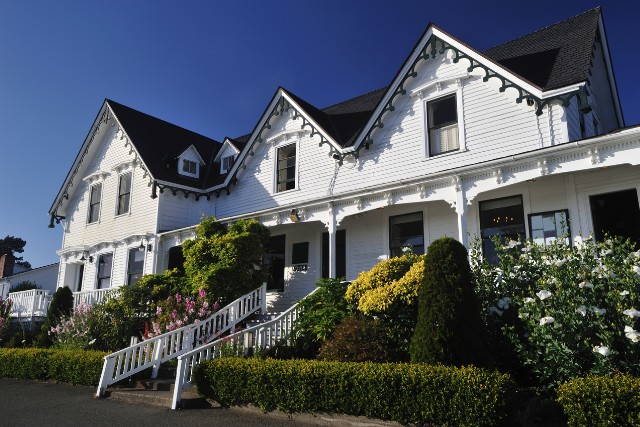
On the way, Billy notices a printed “BED AND BREAKFAST” notice in a lit window, with a vase of yellow chrysanthemums below it. Looking in, he sees a bright fire, pleasant furniture, a little dachshund curled up asleep, and a parrot in a cage.
Billy decides that animals are usually a good sign in a place like this. The room looks like a nice, decent house to stay in.
He still thinks a pub like The Bell and Dragon would be more congenial, with beer, darts, and people to talk to. To him, boarding houses suggest watery cabbage, greedy landladies, and the smell of kippers. Then the notice in the window seems to hold his eyes, and he rings the bell almost without deciding to.
More Reasons and Considerations
The landlady opens the door the moment he rings and greets him warmly. She offers a room for five and sixpence a night, breakfast included, which Billy finds remarkably cheap.
She also mentions small comforts, such as a hot-water bottle between the sheets and a gas fire she can light for him. To Billy, this feels like the kind of attentive service he would not get at a cheap hotel.
Billy is puzzled by the only two names in the guest book, Christopher Mulholland and Gregory W. Temple, which seem familiar and are more than two years old. He brushes the feeling aside because the landlady is so kind.
The comforts that make the house look promising are the trap. The dachshund and the parrot are stuffed, the landlady says she stuffs her pets herself, and Billy’s tea tastes of bitter almonds, a hint of poison.
Dahl’s opening also works as a picture of what real guests look for. A clean, well-lit front, a fair price, and a warm welcome reflect a well-targeted market strategy, and attentive service is part of a successful business model for any innkeeper.
Sources
- Kiss Kiss by Roald Dahl, Penguin Books