How Do Hotels Keep Sheets White? Expert Methods for Immaculate Bedding
Contents
- Key Takeaways
- Professional Laundry Methods for White Sheets
- Commercial Washing Equipment
- Optimal Water Temperature
- Sheet Sorting And Pre-Treatment
- Effective Cleaning Agents
- Detergents Used By Hotels
- Bleach And Whitening Solutions
- Stain Removal Techniques
- Preventive Practices For Maintaining Whiteness
- Frequent Sheet Replacement Schedules
- Proper Storage Conditions
- Sustainable And Eco-Friendly Solutions
- Green Laundry Products
- Water And Energy-Saving Technologies
- Frequently Asked Questions
- What type of detergent is commonly used by hotels for white linens?
- Are peroxide-based cleaning agents essential for maintaining the whiteness of hotel sheets?
- Can guests be charged for irreversibly staining hotel sheets, and how is this managed?
- What laundering methods do hotels use to achieve a crisp, white finish on towels and linens?
- Sources
Ever wonder how hotels keep sheets white after so many guests? Hotels use commercial laundry equipment, carefully measured chemicals, and strict routines. They also treat stains early so they don't set.
Some of these methods are surprisingly simple, and some hotels use greener products without losing results.
Key Takeaways
- Hotels rely on heavy-duty equipment and controlled wash cycles.
- Detergent, bleach, and stain treatment are measured, not guessed.
- Worn or stained linens are pulled from service.
Professional Laundry Methods for White Sheets
Hotels use large machines, controlled water temperatures, and careful sorting to keep linens white.
Commercial Washing Equipment
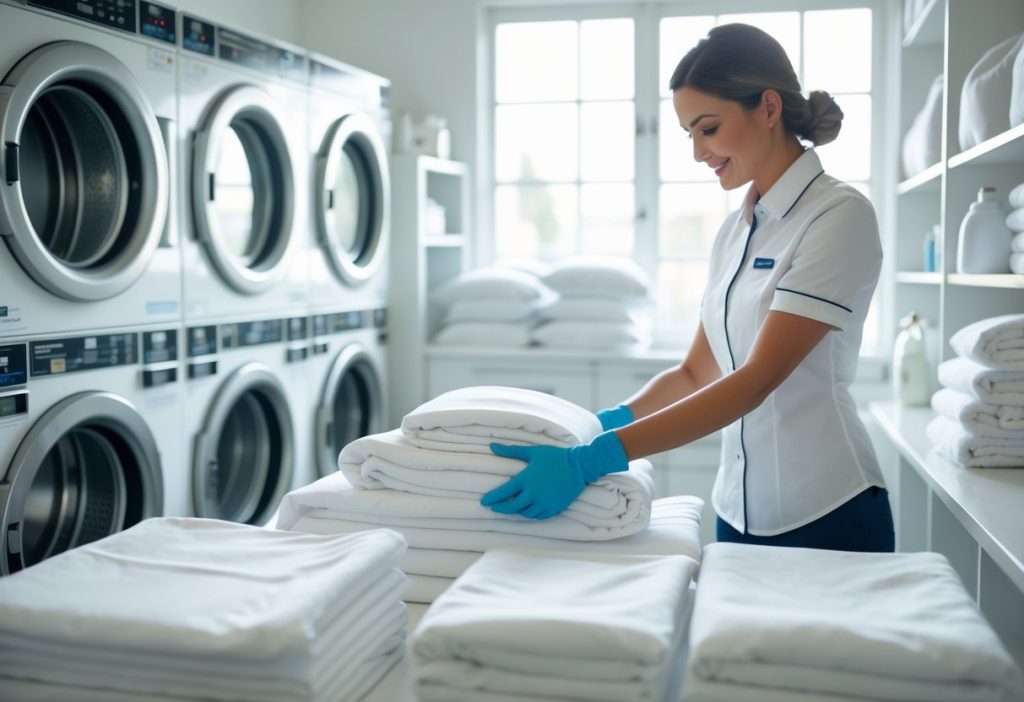
Hotel laundries and outside linen services use large washer-extractors. These are heavier duty than the commercial washers found in coin laundries, and many connect to automatic dispensers that measure detergent and other chemicals.
Programmable controls let staff set exact wash, rinse, and extraction cycles for white linens. High-speed extraction spins out much of the water, which shortens drying.
Many laundries send sheets from the washer straight to a flatwork ironer, a heated roller that dries and presses them in one pass. That's where the crisp, flat finish comes from.
Optimal Water Temperature
Hot water helps break down body oils and lift stains. Healthcare laundry guidance commonly recommends at least 160°F (71°C) for 25 minutes for hot-water washing.
Many laundries now use lower-temperature cycles to save energy. Those rely on bleach and carefully controlled detergent and cycle timing to get linens clean.
Sheet Sorting And Pre-Treatment
Staff separate whites from colored linens and sort by soil level, so heavily soiled items don't dirty lightly used ones.
Stained items are pulled aside and pre-treated before washing.
| Step | Action |
|---|---|
| 1. Color | Whites kept separate from colored items |
| 2. Soil Level | Heavily soiled separated from lighter loads |
| 3. Pre-Treat | Spots treated with a stain remover |
| 4. Load | Linens loaded by weight to match washer capacity |
Sorting and pre-treating keep the whole load bright and help sheets last longer.
Effective Cleaning Agents
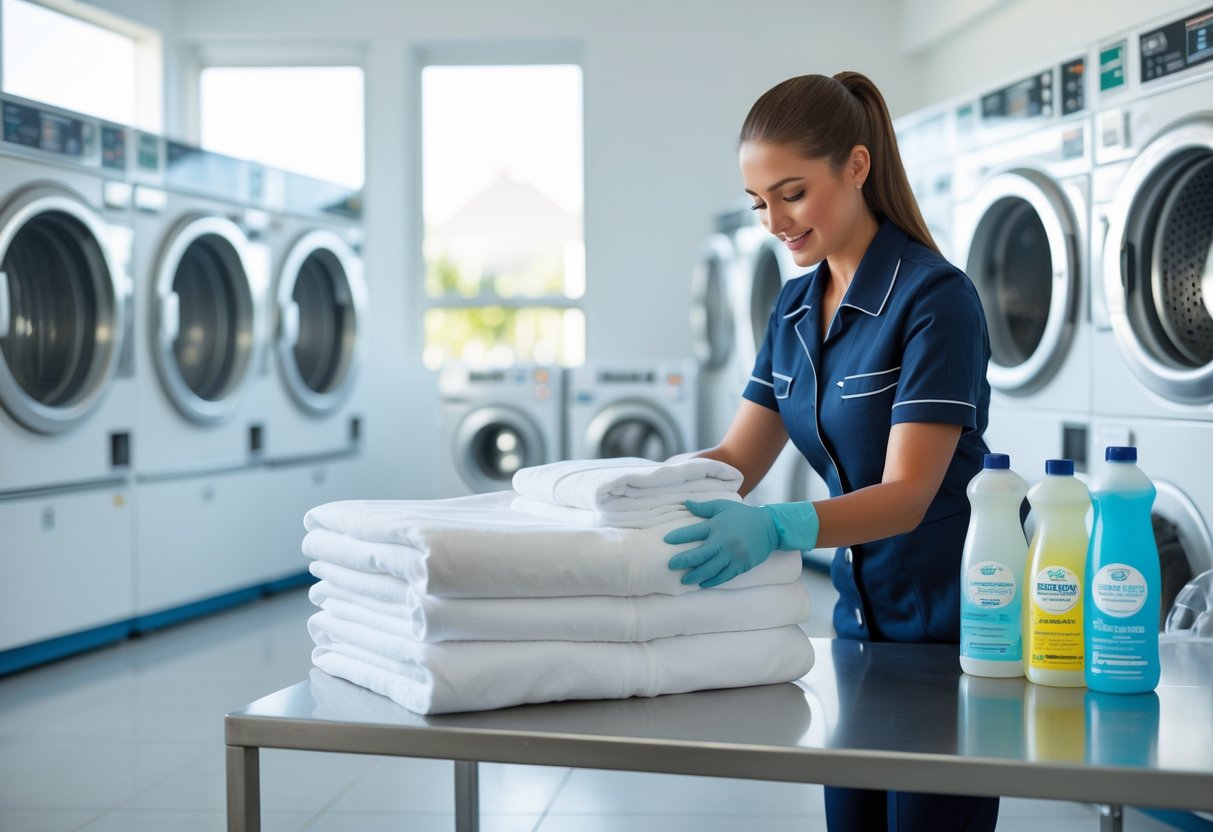
The right mix of detergent, whitener, and stain remover keeps linens bright.
Detergents Used By Hotels
Commercial laundry detergents are built to remove body oils, sweat, and grime. Many systems also add water softeners to prevent mineral buildup that makes whites look dull.
Some detergents contain enzymes that break down protein stains. Hotel linens are often washed with unscented or lightly scented products.
Hotels measure detergent carefully. Too much leaves residue that can make sheets feel stiff and look dingy.
Bleach And Whitening Solutions
Bleach is a common way to keep white linens white. Hotels use chlorine bleach in measured amounts, since too much weakens cotton fibers over time.
Some hotels use oxygen-based bleach instead. It is gentler on fabric and still brightens whites.
Workers wear gloves and need good ventilation when handling bleach. Never mix bleach with ammonia, vinegar, or other cleaners. CDC advises: "Do not mix products or chemicals with each other." Linens are rinsed thoroughly to remove chemical residue.
Stain Removal Techniques
Common stains include makeup, blood, coffee, and wine. Staff treat them as soon as possible, blotting instead of rubbing.
| Stain Type | Pre-Treatment Used | Method |
|---|---|---|
| Blood | Cold water, enzyme cleaner | Soak in cold water, then wash |
| Coffee | Detergent | Blot, rinse, wash |
| Makeup | Degreasing pre-treatment, detergent | Dab, launder promptly |
| Wine | Detergent or oxygen bleach | Blot, pre-soak, then wash |
Treat blood with cold water first, since hot water can set it. Linens are checked after washing, and items that still show stains are re-treated or retired.
Preventive Practices For Maintaining Whiteness
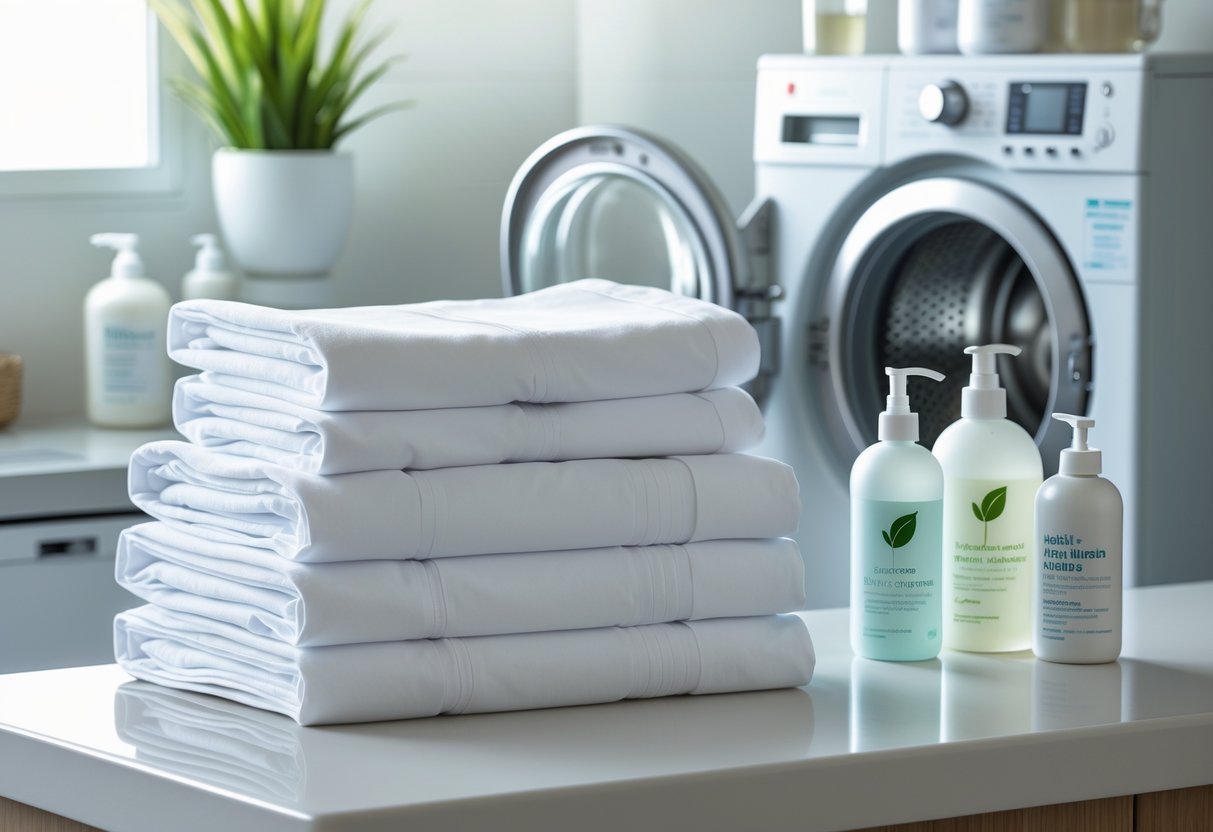
Steady routines and good storage make a visible difference.
Frequent Sheet Replacement Schedules
Hotels pull linens that are thin, frayed, stained, or graying. Many track linen inventory and replace sheets on a regular cycle, since every wash wears cotton a little.
Staff are trained to spot early signs like discoloration and fraying, so only bright sheets reach guest rooms.
Proper Storage Conditions
Clean sheets belong in a dry, cool, well-ventilated space. Humidity can cause mildew, and long exposure to sunlight can cause yellowing.
Clean linens are kept away from soiled laundry and cleaning chemicals.
Key tips for sheet storage:
- Store in a dry, cool place
- Keep away from cleaning chemicals and used linens
- Rotate stock so the oldest clean sheets are used first
Sustainable And Eco-Friendly Solutions
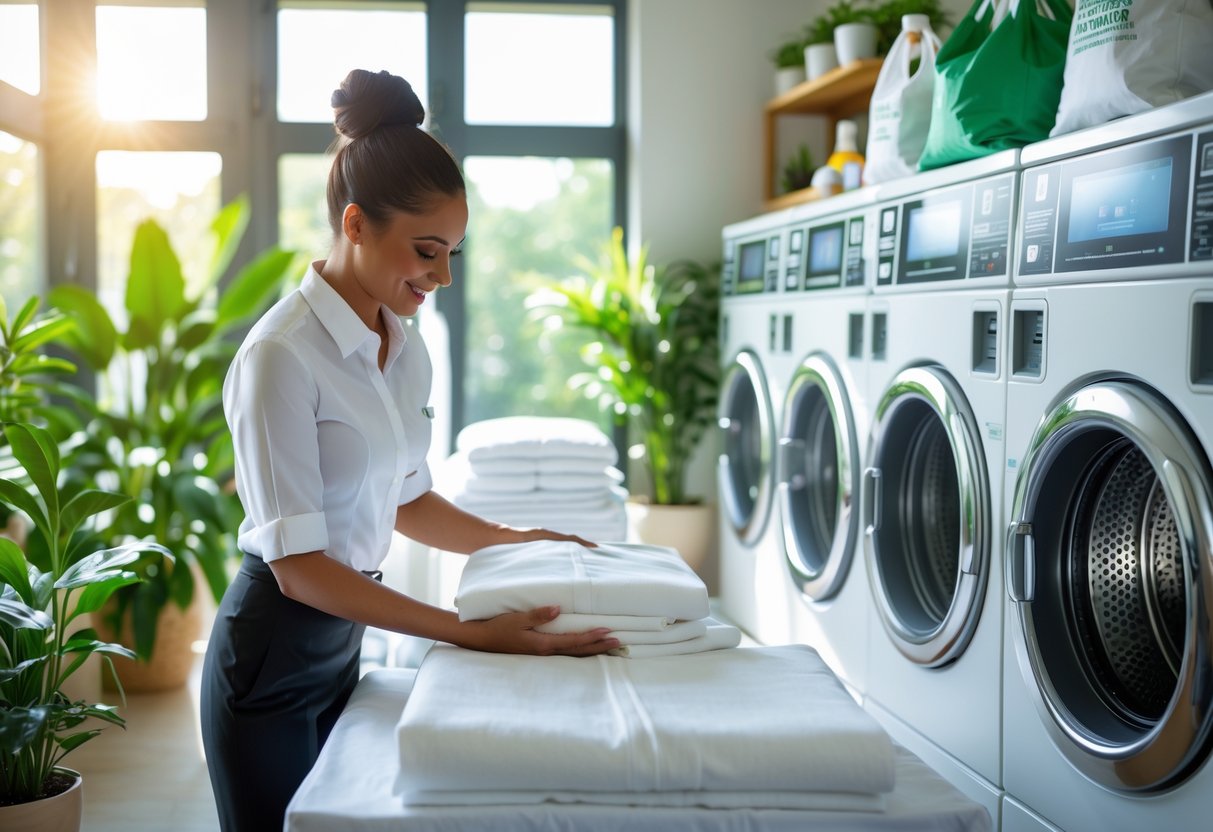
Many hotels are cutting water, energy, and chemical use in their laundries.
Green Laundry Products
Some hotels use concentrated or biodegradable detergents, which reduce packaging and chemical load. Some use oxygen-based brighteners instead of chlorine bleach.
Common steps include:
- Using biodegradable or concentrated detergents
- Measuring detergent precisely
- Using lower-temperature cycles where they still clean effectively
Water And Energy-Saving Technologies
High-efficiency washers match water levels to the load, and high-speed extraction removes more water before drying, which cuts dryer energy.
Some large laundries reuse rinse water through recycling systems. Towel and linen reuse programs, where guests choose to keep their linens for another night, also reduce laundry loads.
Read Also: What Do Hotels Use for Scent?
Frequently Asked Questions
Here are quick answers about how hotels keep linens white.
What type of detergent is commonly used by hotels for white linens?
Commercial laundry detergents made for heavy use, often dispensed automatically. Many contain optical brighteners that help whites look brighter.
Are peroxide-based cleaning agents essential for maintaining the whiteness of hotel sheets?
Not essential, but common. Oxygen (peroxide-based) bleach brightens whites and is gentler on fabric than chlorine bleach.
Can guests be charged for irreversibly staining hotel sheets, and how is this managed?
Some hotels charge for linens that are ruined beyond cleaning. Housekeeping reports the damage, and the front desk may add a replacement fee to the card on file. Policies vary.
What laundering methods do hotels use to achieve a crisp, white finish on towels and linens?
Sheets are washed with controlled heat and chemicals, then often run through a flatwork ironer that dries and presses them in one step. Towels are tumble dried. CDC's laundry guidance notes that drying and ironing add significant germ-killing action.
Sources
- Laundry and Bedding, Centers for Disease Control and Prevention
- When and How to Clean and Disinfect Your Home, Centers for Disease Control and Prevention
- Commercial Clothes Washers, U.S. Department of Energy