Do European Hotels Have Hair Dryers? What Travelers Need to Know
Contents
- Key Takeaways
- Hair Dryer Availability in European Hotels
- Standard Hair Dryer Amenities by Hotel Type
- Differences Between Luxury, Mid-Range, and Budget Hotels
- Hair Dryer Options: Wall-Mounted vs. Portable Models
- Using and Bringing Hair Dryers While Traveling in Europe
- Electrical Outlets and Voltage Considerations
- Travel Hair Dryers and Dual Voltage Devices
- Essential Accessories: Plug Adapters and Voltage Converters
- Alternative Hair Drying Methods for Travelers
- Frequently Asked Questions
- What amenities are typically included in European hotel rooms?
- Can I expect to find a hair dryer in a hotel room in Europe?
- Are hair dryers with dual voltage common in hotels across Europe?
- What should I look for in a travel hair dryer suitable for European destinations?
- Sources
Most hotels in Europe provide hair dryers for guests, but it varies by hotel type. Some have one in every room, while others lend them on request. Hostels and very basic properties may not have them at all.
If you prefer to bring your own, check that it works on European voltage before you pack it.
Key Takeaways
- Most mid-range and upscale European hotels provide hair dryers.
- Europe runs on about 230 volts, so North American dryers need to be dual voltage.
- Check the hotel's amenity list or ask before you travel.
Hair Dryer Availability in European Hotels
Availability depends mostly on the hotel's category and style.
Standard Hair Dryer Amenities by Hotel Type
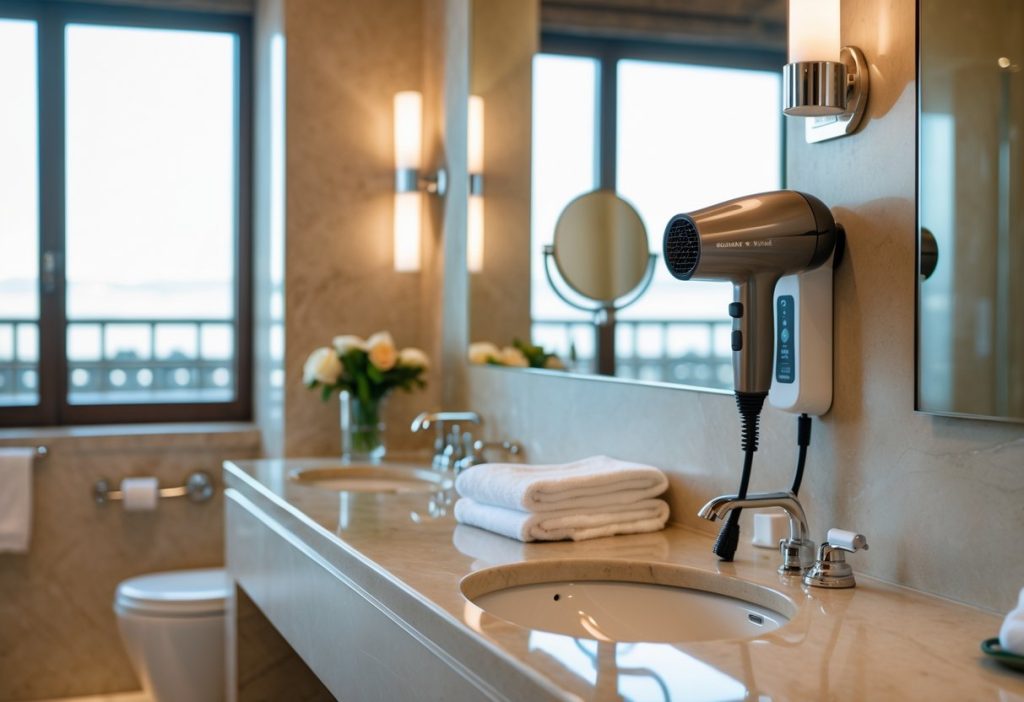
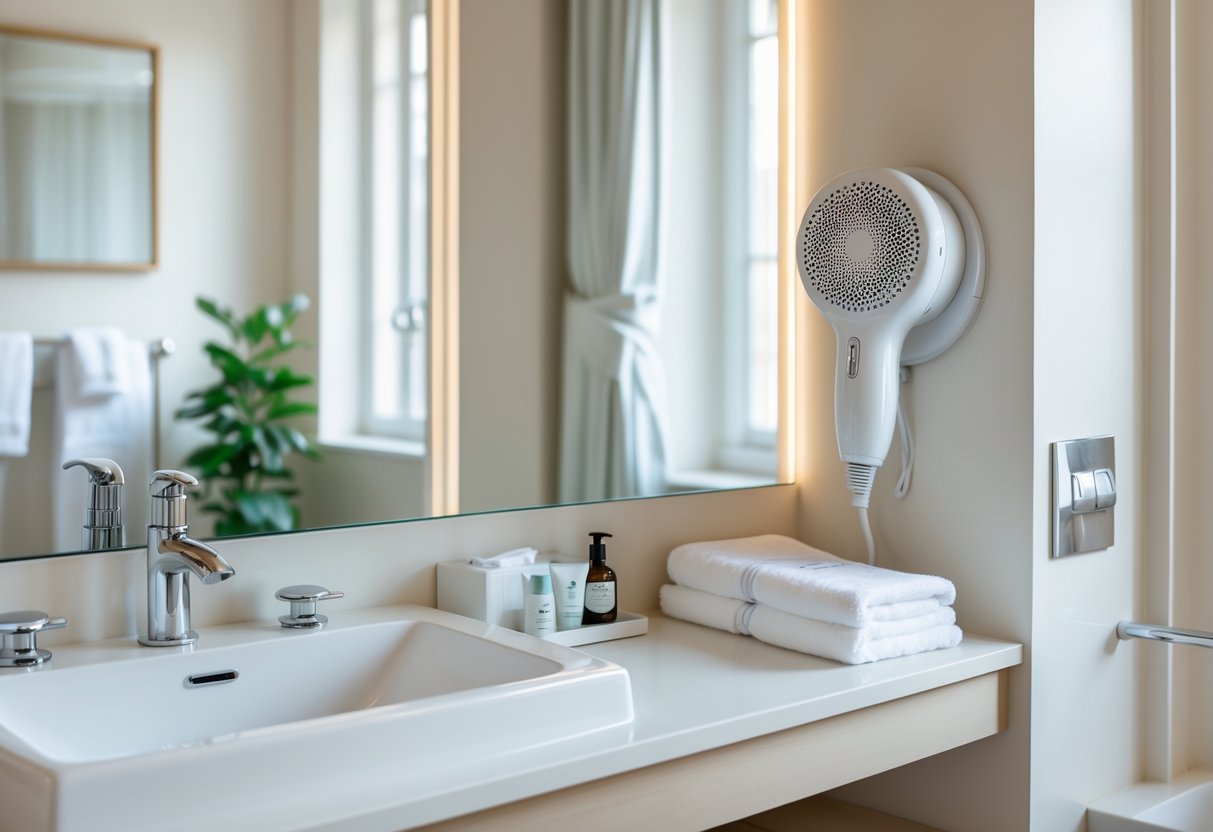
Hair dryers are standard in most mid-range and luxury hotels in Europe. Many are wall-mounted in the bathroom.
Budget hotels may also supply them, but the models can be basic. Hostels often have limited amenities, so a hair dryer may not be available.
Differences Between Luxury, Mid-Range, and Budget Hotels
Luxury hotels often provide stronger handheld dryers with several heat settings.
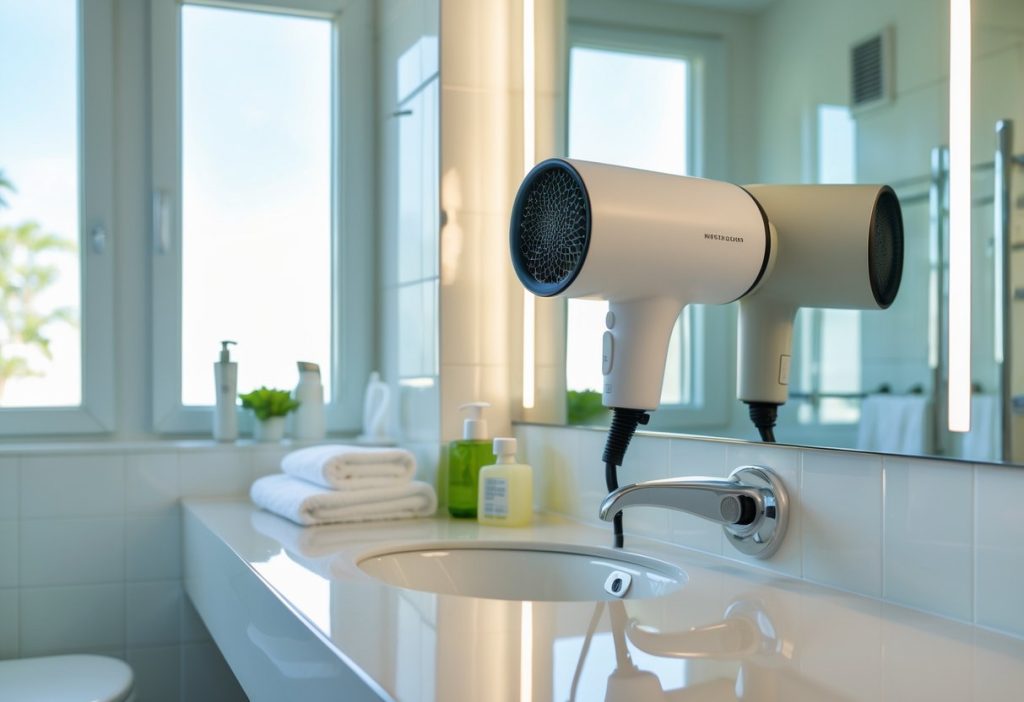
Mid-range hotels typically offer standard dryers that work for everyday use. They may be wall-mounted or handheld.
Budget hotels can be hit or miss. Check the amenity list in advance to decide whether to bring your own.
Hair Dryer Options: Wall-Mounted vs. Portable Models
Wall-mounted dryers are common in European hotel bathrooms. They save space and can't walk off with guests, but many are low powered.
Handheld dryers are more common in upscale rooms and are usually stronger. If your room has a wall unit and you have thick hair, ask the front desk whether they can lend a handheld one.
Using and Bringing Hair Dryers While Traveling in Europe
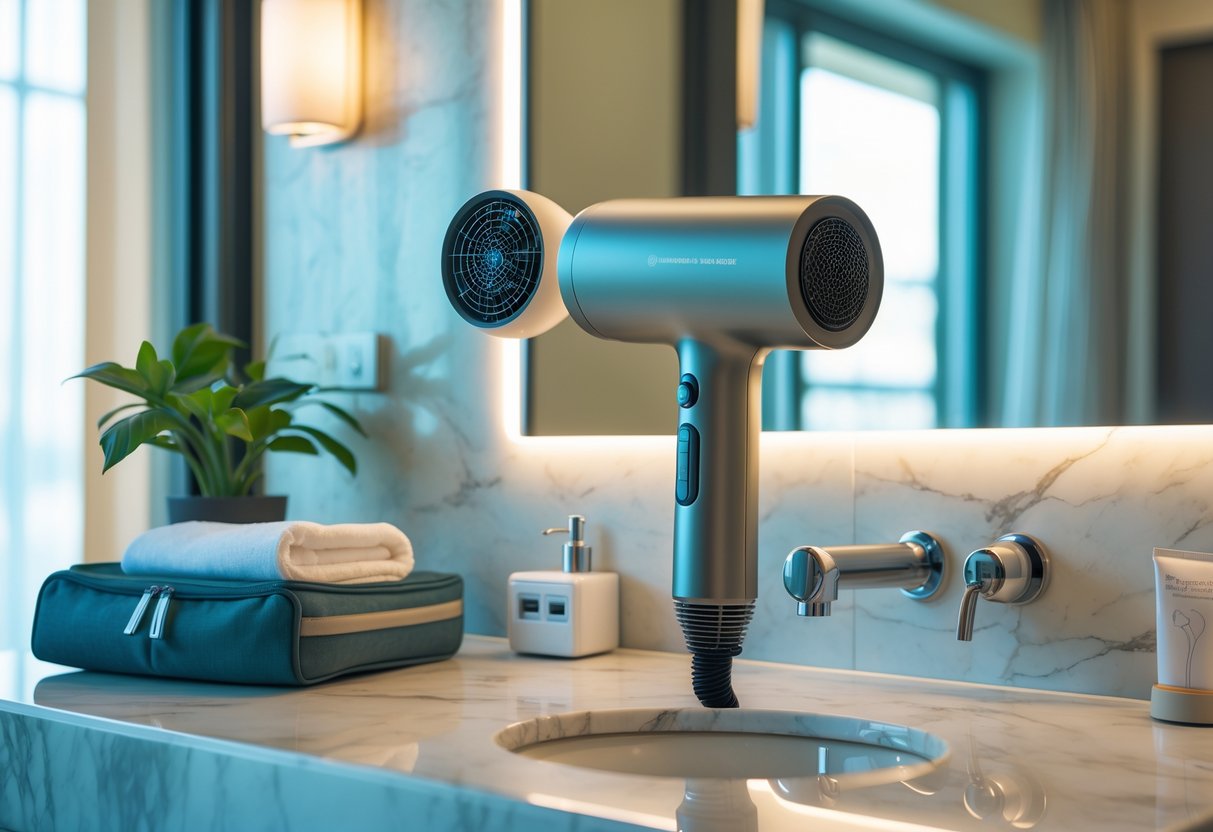
Bringing your own dryer takes a little planning because of voltage and plug differences.
Electrical Outlets and Voltage Considerations
Most of Europe uses about 230 volts at 50 hertz. North America uses about 120 volts at 60 hertz. Plugging a 120-volt-only dryer into a 230-volt outlet can burn it out or create a fire hazard.
Most of continental Europe uses plugs with two round pins. The United Kingdom, Ireland, Malta, and Cyprus use a different three-prong plug, so check the country before buying an adapter.
Travel Hair Dryers and Dual Voltage Devices
Travel hair dryers are lighter and smaller, and many are dual voltage. A dual-voltage dryer often has a switch you must set to the local voltage before plugging in. Check the label or manual.
Look for a compact design, a folding handle, and more than one heat setting. Travel models usually have lower wattage than full-size dryers, so drying takes a bit longer.
Essential Accessories: Plug Adapters and Voltage Converters
A plug adapter only changes the plug shape. It does not change the voltage.
A voltage converter steps 230 volts down to 120 volts. Hair dryers draw a lot of power, and many small travel converters are rated only for low-wattage devices. If you use a converter, its wattage rating must be higher than the dryer's. For most travelers, a dual-voltage dryer or the hotel's dryer is the simpler and safer choice.
| Accessory Type | Function |
|---|---|
| Plug Adapter | Lets your plug fit the local outlet; does not change voltage |
| Voltage Converter | Changes 230V to 120V; must be rated above the device's wattage |
Whatever dryer you use, keep it away from a filled sink or tub. U.S. hair dryers must have immersion protection, but dryers bought elsewhere and older hotel units may not. A ground fault circuit interrupter (GFCI) on the outlet cuts power almost instantly if an appliance drops into water. If a dryer falls in, unplug it before reaching for it.
Alternative Hair Drying Methods for Travelers
If you'd rather not pack a dryer, the hotel's unit is usually fine for a short stay.
A microfiber towel absorbs water well and cuts drying time. Wrap your hair for a few minutes before using a dryer or letting it air dry.
Frequently Asked Questions
Here are quick answers about hotel hair dryers in Europe.
What amenities are typically included in European hotel rooms?
Most rooms include towels, bed linens, and basic toiletries. Many also have a TV, a safe, and Wi-Fi. Washcloths are less common in Europe than in U.S. hotels.
Can I expect to find a hair dryer in a hotel room in Europe?
In most mid-range and upscale hotels, yes. It may be installed in the bathroom or available on request. Check before booking if it matters to you.
Are hair dryers with dual voltage common in hotels across Europe?
Hotel dryers are built for the local 230-volt supply, so they don't need to be dual voltage. Dual voltage matters only for a dryer you bring from home.
What should I look for in a travel hair dryer suitable for European destinations?
Choose a lightweight, compact model with dual voltage and a folding handle. Pack the right plug adapter for each country you visit.
Sources
- CPSC And Seven Importers Recall Electric Hair Dryers, U.S. Consumer Product Safety Commission
- Using A Portable Hair Dryer? A GFCI Could Save Your Life, U.S. Consumer Product Safety Commission