How Old Do You Have To Be To Get A Hotel Room In Iowa And What To Expect

Contents
- Key Takeaways
- Minimum Age Requirements for Booking a Hotel Room in Iowa
- State Laws and Legal Age for Hotel Bookings
- Typical Minimum Check-In Age at Iowa Hotels
- Exceptions and Variations by Hotel Chain or Property
- Factors Impacting Age Restrictions and Alternative Accommodation Options
- Why Some Hotels Require Guests to Be 21 or Older
- Proof of Identification and Credit Card Policies
- Alternative Lodging Options for Young Travelers
- Frequently Asked Questions
- Are there any age restrictions for checking into hotels in Iowa?
- Can a person under 18 reserve a hotel room in Iowa?
- What identification is needed for a minor to book a hotel in Iowa?
- Sources
If you plan to book a place to stay in Iowa, knowing the age rules is important. In most cases, you must be at least 18 years old to get a hotel room in Iowa. Some hotels set their own higher limit, usually 21.
You can avoid surprises by checking a hotel’s policy before booking. Policies can vary based on the chain, location, and type of payment you plan to use. This simple step can save time and prevent last-minute problems.
Key Takeaways
- Most hotels in Iowa require you to be at least 18.
- Some hotels set the minimum age at 21.
- Always confirm the policy before booking.
Minimum Age Requirements for Booking a Hotel Room in Iowa

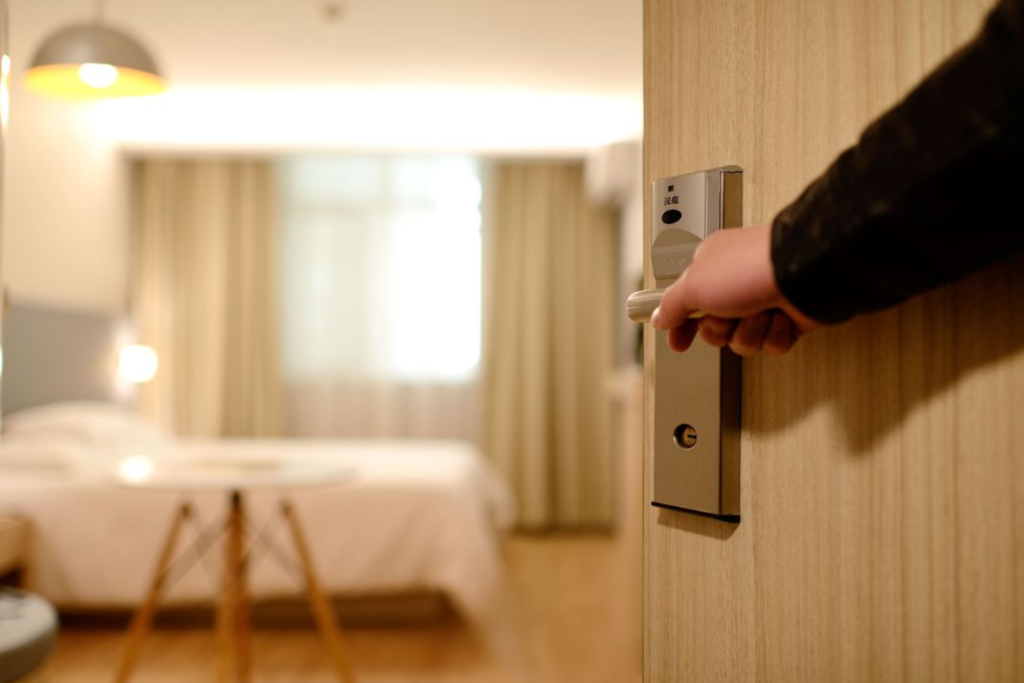
Photo by User:Mattes, Public domain, via Wikimedia Commons
In Iowa, the rules for booking a hotel room depend on both state laws and each hotel’s own policies. You may be able to reserve a room at a younger age, but you usually need to meet the hotel’s minimum check-in age to stay.
State Laws and Legal Age for Hotel Bookings
Iowa law does not set a specific minimum age for booking a hotel room. What matters is the age of majority. Under Iowa Code section 599.1, the period of minority ends at 18, or earlier by marriage.
Hotels use this rule to decide who can check in. A minor generally can't be held to a contract, so most hotels won't let anyone under 18 sign the registration on their own.
Some Iowa hotels allow younger guests to stay if a parent or guardian books the room in their own name and checks in. In most cases, you will need to show valid government-issued ID to confirm your age.
Typical Minimum Check-In Age at Iowa Hotels
Even though Iowa law allows adults at 18 to sign contracts, each hotel sets its own minimum check-in age. Most use 18 or 21.
Hotels that choose 21 usually cite underage drinking, property damage, or liability. The drinking age is 21 under the national minimum drinking age law.
Many budget and roadside hotels in Iowa allow check-in at 18. These properties usually have fewer amenities that require age restrictions. Always confirm the hotel’s policy before booking to avoid being turned away at check-in.
Exceptions and Variations by Hotel Chain or Property
Minimum check-in ages can vary widely between hotel brands and even between locations of the same chain. For example:
| Hotel Brand | Common Check-In Age in Iowa | Notes |
|---|---|---|
| Marriott | 18 or 21 | Set by each hotel |
| Hilton | 18 or 21 | Set by each hotel |
| Motel 6 | Often 18 | Confirm with the location |
| Holiday Inn | 18 or 21 | Set by each hotel |
Independent hotels may have their own rules. Smaller motels often allow 18-year-olds, while upscale resorts may require 21.
If you are under the listed age, you may still stay if a parent books the room, checks in, and lists you as a guest. Some hotels accept a credit card authorization form from an adult, but that usually covers payment, not the age rule.
Factors Impacting Age Restrictions and Alternative Accommodation Options

Hotel age requirements in Iowa can vary based on company policy, insurance rules, and payment procedures. Your options may also depend on whether you can provide valid identification, a credit card, or choose a different type of lodging.
Why Some Hotels Require Guests to Be 21 or Older
Many hotels in Iowa set the minimum check-in age at 18, but some raise it to 21. This is often due to alcohol service on the property, such as in-room minibars or on-site bars.
Hotels may also follow stricter policies to reduce potential liability. For example, corporate chains sometimes apply the same age rule in every state, even if local laws allow younger guests.
If you are under 21, you should check the hotel’s terms and conditions before booking to avoid being turned away at check-in.
Proof of Identification and Credit Card Policies
Most hotels in Iowa require a government-issued photo ID at check-in. This confirms your age and identity. Acceptable forms include a driver’s license, passport, or state ID card.
A valid credit card in your name is also common. Hotels use it to secure payment and cover possible incidentals or damages. Some may accept debit cards but could place a hold on your funds.
If you book online, the name on your reservation should match your ID. Mismatches can delay or prevent check-in.
Tip: Call ahead to confirm the payment and ID requirements, especially if you plan to use cash or a prepaid card.
Alternative Lodging Options for Young Travelers
If you are under the hotel’s minimum check-in age, you still have other options. Motels, hostels, and some vacation rentals may allow guests 18 and older.
Short-term rental platforms set a floor of their own. Airbnb's terms of service require users to be 18 or older to register, and hosts can add stricter rules.
Campgrounds are another option. Many have their own age rules, so check before you book.
When booking, always read the policy details. This helps you avoid cancellations or extra costs upon arrival.
Frequently Asked Questions
In Iowa, hotels often set minimum age requirements for guests. These rules can vary by property and may also depend on whether you are booking or just checking in.
Are there any age restrictions for checking into hotels in Iowa?
Most hotels in Iowa require you to be at least 18 years old to check in. Some set the minimum age at 21, especially if they serve alcohol. You should confirm the policy with the hotel before you book.
Can a person under 18 reserve a hotel room in Iowa?
In most cases, no. Even if you can make a reservation online, the hotel may refuse check-in without a parent or guardian present. A few hotels allow it with written consent from a parent, but this is uncommon.
What identification is needed for a minor to book a hotel in Iowa?
Hotels usually require a government-issued photo ID, such as a driver's license, state ID, or passport. A minor may also need a signed permission form from a parent or guardian, and many hotels want a card in the name of the person checking in.
Sources
- Iowa Code section 599.1, Iowa Legislature
- 23 U.S. Code section 158: National minimum drinking age, Legal Information Institute, Cornell Law School
- Terms of Service, Airbnb