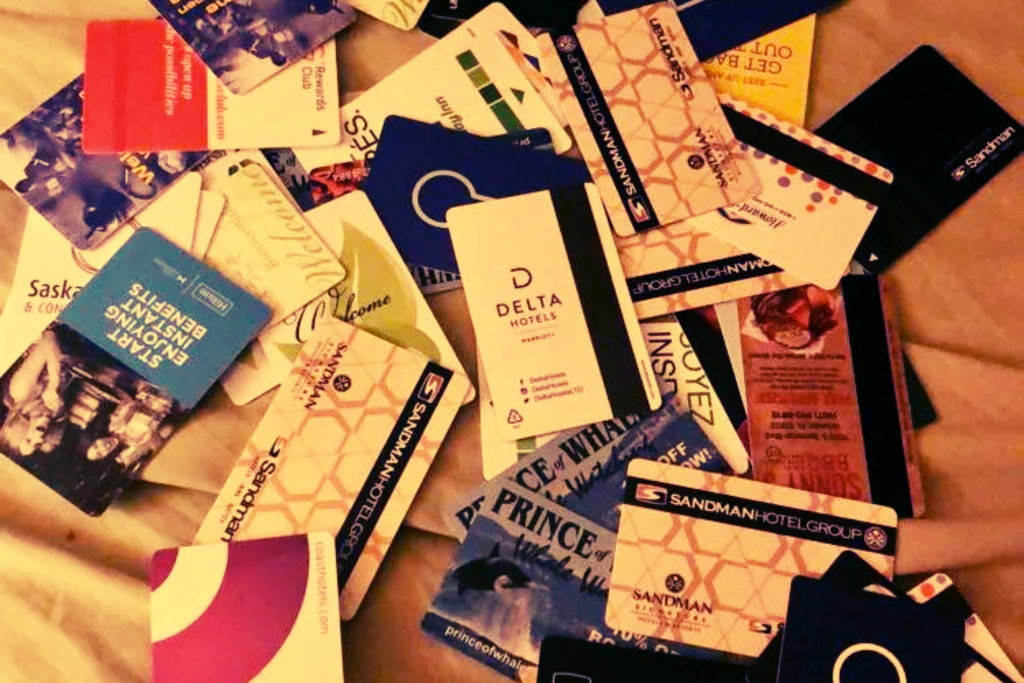
A leftover hotel key card is one of the easiest travel odds and ends to deal with. The simplest choice is to return a serviceable card to the front desk or drop box, since hotels can often reissue it to another guest, or to keep it for a small everyday use like a scraper or bookmark if returning it isn’t convenient. Whether the hotel can actually reissue it depends on the card’s condition and the property’s own issuing system, not on any fixed rule.
The bigger mix-up people run into is treating “reuse” and “recycle” as the same thing. A card that’s cracked or won’t read anymore might still have some life left as a scraper or a keepsake, but that’s different from asking whether it belongs in a recycling bin. Those two questions have separate answers, and mixing them up is how good intentions turn into wasted plastic.
This gets simpler once the card’s condition and its materials are treated as two separate questions.
Key Takeaways
- Returning a working card to the front desk gives the hotel a real shot at reissuing it, but a damaged card is better off reused at home or set aside for disposal.
- Reusing a card and recycling its materials are different questions, and a plastic-looking card isn’t automatically welcome in curbside bins.
- Free, low-effort options like scraping, bookmarking, or a phone-tap shortcut get more use out of a card before it’s tossed.
Should You Return or Keep a Used Card?
Returning a working card is the better default, since it gives hotel key cards, and the hospitality industry that issues millions of them, a real chance at another life. Keeping one is fine too, especially for a card that’s scratched, cracked, or already showing wear. The right call comes down to the card’s condition and how much the return process actually costs in effort.
Why Return a Serviceable Card?
A card that still reads cleanly is worth handing back. Front desk staff can inspect it and, if it checks out, run it through their issuing system for the next guest instead of opening new stock. That saves the property money and cuts down on how many old hotel key cards need replacing.
Returning is easy, too. Drop it at the front desk during checkout, use a collection box near the elevator, or leave it in the room if the hotel says that’s fine.
Can the Hotel Issue It to Another Guest?
Reissuing a card is possible, but not guaranteed for every card that comes back. It depends on physical condition (no cracks, no snapped edges) and whether the chip or stripe still reads reliably on the hotel’s own equipment. Magnetic stripe cards tend to wear out after repeated re-encoding, while RFID cards avoid that specific wear but can still fail from cracking or age.
There’s no fixed number of times a card gets reused. Some properties track failures and retire cards individually rather than guessing at a lifespan by card type.
Is It Okay to Keep One as a Souvenir?
Keeping a card as a souvenir is common and rarely causes a problem. Most hotels expect some percentage of cards to leave with guests and budget for that replacement cost, which usually runs a small amount per card. A handful of upscale or boutique properties use pricier proprietary systems and may charge a fee for unreturned cards, so it’s worth asking the front desk if there’s any doubt.
How Can You Reuse or Dispose of a Card You Keep?
A card that’s staying with the reader has a few solid options before it goes in the trash. Simple reuse projects need no special tools, a phone-tap shortcut works only with certain contactless cards and phones, and full recycling depends on checking local rules rather than assuming plastic equals recyclable.
What Are Some Free Ways to Repurpose It?
The cheapest use for an old card is also the most practical one. Its stiff, thin shape makes it a natural paint scraper, a guitar pick substitute, or a bookmark that won’t bend in a bag. Anyone furnishing a room for a longer stay can toss a spare card in a drawer for scraping label residue or prying open a stuck battery cover.
Travelers who like keeping mementos can turn a stack of cards into a small display, similar to ideas covered in guides on how to decorate a hotel room, using a shadow box, a corkboard map, or a simple photo album to track where each stay happened.
Can a Contactless Card Work With a Phone Shortcut?
A contactless card can trigger a phone shortcut, but only under specific conditions. This works if the card uses RFID or NFC technology and the phone’s NFC reader supports writing custom actions to it, like pulling up train times or launching an app with a tap. It won’t work with a plain magnetic stripe card, since those key cards don’t carry a chip a phone can read.
Anyone trying this should treat it as a small tech project, not a guaranteed feature of every leftover card.
Can the Complete Card Go in Local Recycling?
A hotel key card rarely belongs in a curbside bin, even when it looks like plain plastic. The full card includes layers most people never think about: a PVC or laminated base, a magnetic stripe, possibly an RFID chip and antenna, plus adhesives and coatings holding it together. Municipal recycling equipment isn’t built to sort or separate those layers, which is why most curbside programs reject them outright.
The better move is checking with a local waste operator or a specialty program before assuming a card is recyclable. Some programs specifically accept wallet-sized plastic cards without embedded electronics, sorting them into reuse or specialty processing instead of standard recycling streams. Cards with a visible chip or antenna often get excluded from those same programs, so it’s worth checking the fine print rather than guessing from the card’s appearance.
| Card Type | Recycling Reality |
|---|---|
| Plain magnetic stripe PVC | Some specialty programs accept it; curbside usually does not |
| RFID chip card | Often excluded from plastic-card recycling programs due to embedded electronics |
| Laminated paper or wood | Depends on coatings and adhesives; check with the program directly |
What Should You Know About Access and Stored Data?
Hotel key cards generally hold very little personal information, often just a room number, stay dates, and a guest reference number the property’s system uses. That means a lost or kept card is unlikely to expose anything sensitive. Checking out doesn’t automatically guarantee every lock has updated its records, so a card that’s still in someone’s pocket could, in some systems, remain active for longer than expected.
Anyone worried about a card working after their stay can ask the front desk to confirm deactivation, especially at a property using an older or offline lock system.
Frequently Asked Questions
Are you supposed to give hotel key cards back?
Returning a hotel key card isn’t usually required, but most hotels appreciate it since a returned card can sometimes be reissued to another guest. A few upscale properties with costly proprietary key systems may expect cards back and could charge a fee if they’re missing. Checking with the front desk clears up any doubt.
Can you keep hotel keycards after checkout?
Keeping a hotel keycard after checkout is common and rarely causes an issue, since hotels typically expect a certain number of cards to leave with guests. The card becomes inactive once the hotel’s system cancels its access. It holds no value or use outside that specific property’s locks.
How do you dispose of a hotel key card that cannot be reused?
A card that’s too damaged to reuse should be checked against local recycling rules before tossing it in a curbside bin. Many municipal programs can’t process the mixed materials in a finished card, including the stripe, chip, or laminate layers. A specialty plastic-card recycling program is a better bet if one operates nearby.
Can you repurpose a hotel key card without special tools?
Plenty of simple reuses need nothing more than the card itself. It works well as a paint scraper, a bookmark, a guitar pick, or a small prying tool for stuck lids and covers. No cutting, heating, or extra equipment is required for these everyday uses.
Does a hotel key card stop working as soon as you check out?
A hotel key card’s access ends based on how the property’s lock system is programmed, not automatically the moment checkout happens. Some systems set a fixed expiration time, while others rely on staff canceling the card manually. This is one reason hotels prefer getting cards back rather than assuming every one stops working right away.
